Inspection FAQ
Should you send the seller the whole inspection report?
Usually you shouldn't send the full report. Learn what to share with the seller, what to keep private, and when your contract requires full copies.
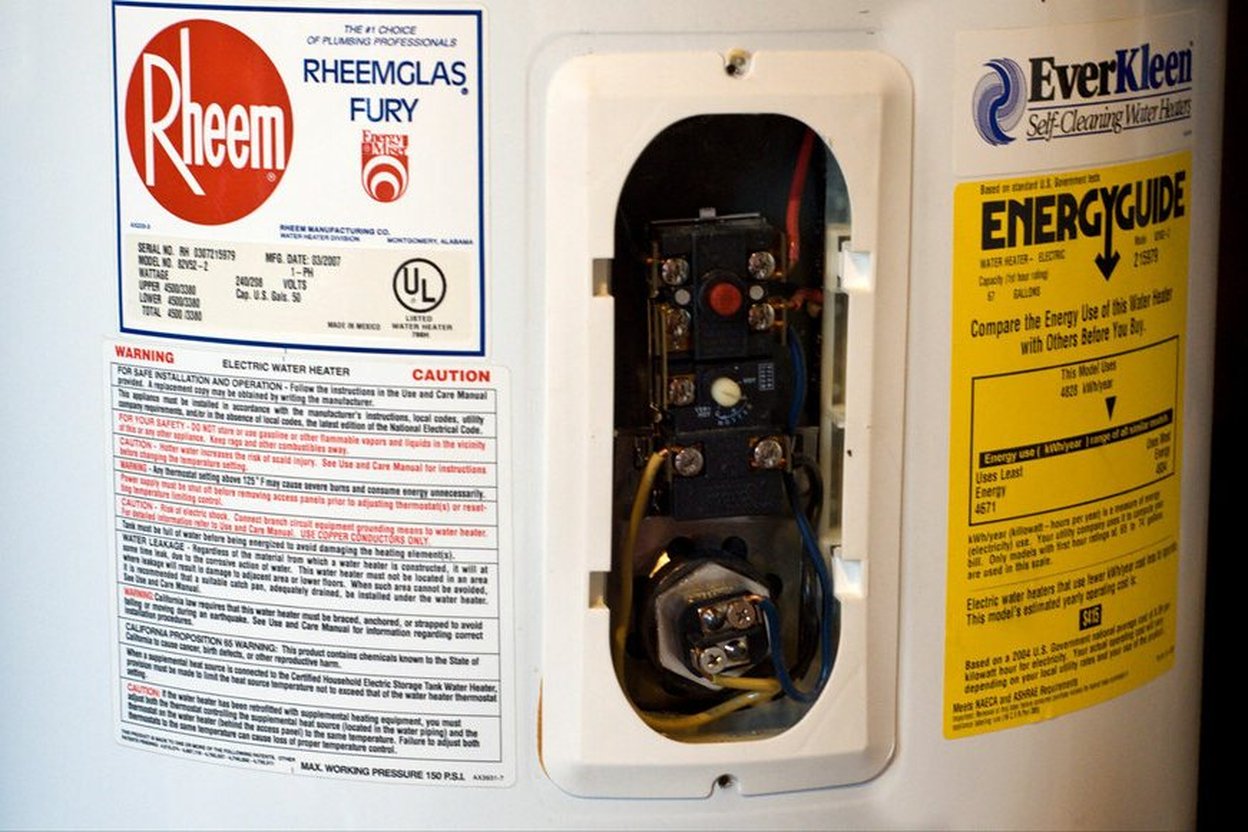
Find the data plate on your furnace or water heater, use the printed date or decode the serial, then compare the age with typical lifespans.
The first cold morning of fall comes, the heat kicks on, and you start wondering how many more winters the furnace has left. Maybe you're touring a house and wondering the same thing about the water heater in the basement. The answer is usually on the unit itself. Find the data plate, look for a printed manufacture date, and if there isn't one, decode the serial number. Every brand hides the date in its own way, so the brand tells you which code to use.
Every furnace and tank water heater has a rating plate or data plate. It's a metal tag or sticker with the brand, model number and serial number. The City of Palo Alto's guide notes that a water heater label shows the manufacturer's name, model, serial number and other specifications.
Some plates make it easy and print a "MFG Date," meaning the date of manufacture. If you see one, use it and you're done. Decode the serial only when no date is printed.
If you do have to decode, start with the brand. Each manufacturer builds the date into the serial number differently: some put the month first, some the year, some use letters, and some use the week of the year. A serial decoded with the wrong brand's method still gives you a date, just a wrong one. Formats have also changed over the decades, and published guides disagree on some brands. The examples below are common patterns, not guarantees. If the result looks wrong, confirm it with the manufacturer.
Water heater. The plate is on the side of the tank, usually toward the top, near where the pipes and controls are. On most tanks you won't need to open anything.
Furnace. This one takes more looking. On upflow and downflow gas furnaces, check:
On horizontal units in an attic or crawlspace, look on the blower section panel or near the control board. On basement or closet units, the plate can be hidden under a service company's sticker. On oil furnaces, read the plate for the furnace itself. The oil burner has its own plate, and its date doesn't tell you the furnace's age.
Safety first. Turn the furnace's power off at the service switch before you take off any panel. That switch usually looks like a light switch on or near the unit. Leave the door safety switch alone, and don't peel off warning or wiring labels to get at a plate underneath. If the only way to reach the plate is to take apart more than a service panel, stop and ask an HVAC technician to read it during a tune-up.
Tip: Take a clear phone photo of the whole plate. Serial numbers are long, easy to misread in a dim basement, and you'll need the exact number if you call the manufacturer.
Rheem. Palo Alto's guide gives the format as month, then year, then the rest of the number. In 1209D01234, "12" is December and "09" is 2009. Rheem has used other formats too, and some guides describe a week-then-year order. If MMYY gives you an impossible month (anything over 12), the unit likely uses a different code, so check with Rheem.
A. O. Smith, current format. Year first, then week of the year. In 1210A002243, "12" is 2012 and "10" is week 10, so early March 2012. In 203707002601001, "20" is 2020 and "37" is week 37, early September 2020.
A. O. Smith, older format. Before a change around 2008–2010, A. O. Smith used a letter for the month, A through M with I skipped:
Two digits near that letter give the year. In 2C062938405, C is March and 06 is 2006. In E07A135491, E is May and 07 is 2007. So if an A. O. Smith serial has a month letter in the first few characters, it's probably from before the switch.
Bradford White. The first letter is the year and the second letter is the month. Month letters run A = January through M = December, skipping I, as above. In HK16433183, H is 2011 and K is October, so October 2011.
The year letters repeat every 20 years:
That means a Bradford White serial starting with "A" could be a 22-year-old tank or a 2-year-old one. To tell which, look at the tank. Heavy rust at the fittings, scale, or a dated-looking jacket points to the older year. A clean tank with modern controls points to the newer one.
Furnace codes follow the same idea, but the pattern depends on the brand family, and many companies make units sold under several names. Common patterns:
Use these as a starting point only. Manufacturers have changed formats over the years, and published guides don't always agree on where the year sits in a given brand's serial.
Two-digit years add another trap. "05" could mean 1995 or 2005 under some schemes. Compare the date with the unit's design. A furnace with a plastic PVC vent pipe and an electronic control board is a newer, high-efficiency design. One with a metal flue and a standing pilot is from an older generation.
Read the plate for a printed MFG date first. Furnace plates print one more often than you might expect. If there's no date and the code is unclear, check the owner's manual, or call the manufacturer's customer line with the model and serial numbers. Lennox, for example, tells owners to use the owner's manual or the serial number to find a furnace's age. A manufacturer can look the serial up directly, which beats any guide.
Once you have a date, compare it with typical lifespans:
Age is a guide, not a failure date. A well-maintained furnace can run past 20 years, and a water heater on hard water can fail well before 10. Lennox suggests considering a high-efficiency replacement once a furnace passes 15 years. Keep in mind that a manufacturer has a reason to recommend replacement.
If you're buying a home:
If you already own the home, fall is a good time to check, before the heating season gets going and before a house full of Thanksgiving guests runs every hot water tap at once.
Photo: Turn Down Your Water Heater (155/365) by trenttsd, BY 2.0.
Usually you shouldn't send the full report. Learn what to share with the seller, what to keep private, and when your contract requires full copies.
Hidden defect after closing? Learn when the seller, the inspector, or you pay, what the state rules mean, and what to do in 30 days.
Compare a repair credit, completed repairs, and a price cut after a home inspection, with loan limits and how to get terms in writing.