Before the ground freezes, test your sump pump with about 5 gallons of water and confirm that it starts, drains the pit, and shuts off on its own. Check the discharge line and backup system too, since an outdoor freeze or failed backup can leave a working pump unable to protect your basement.
You can complete the basic test in about 10 minutes. Keep the pump plugged in and follow the safety steps below as you check its operation.
01The 10-minute bucket test
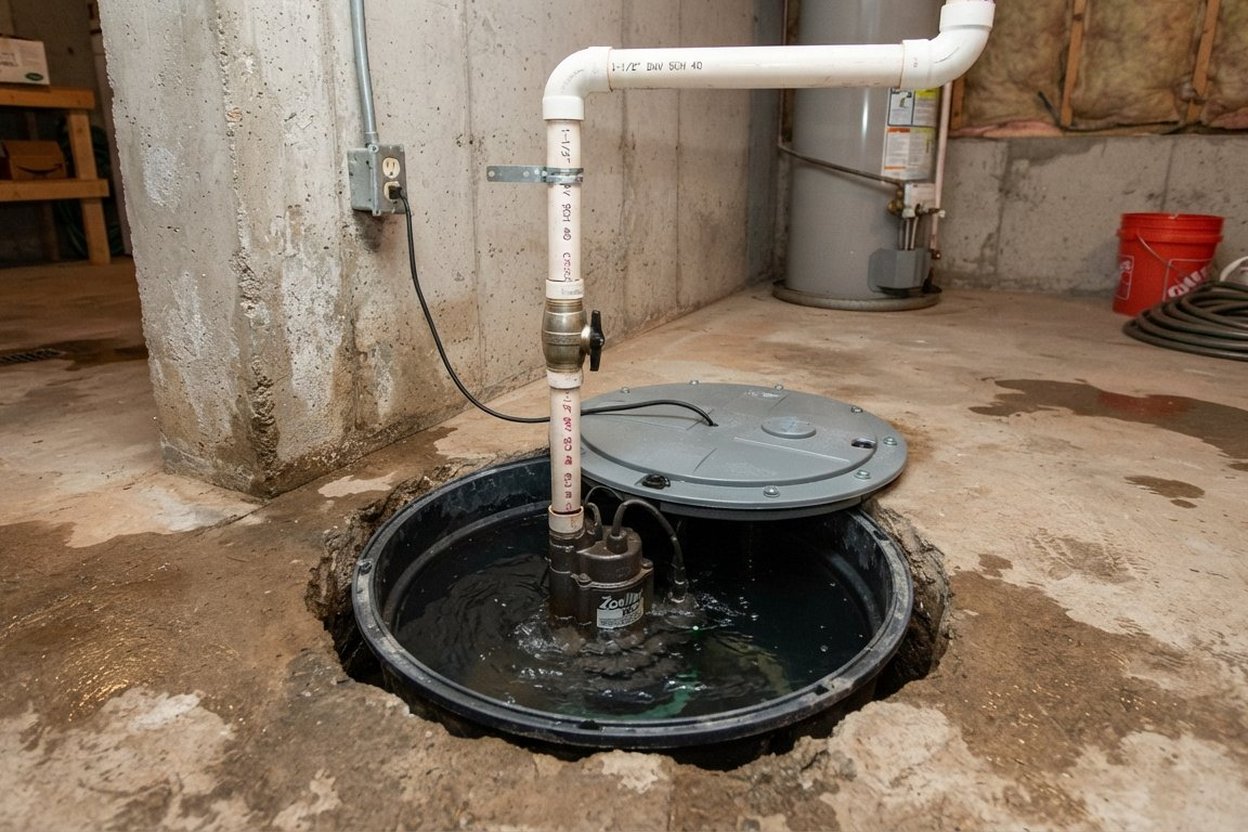
Test the pump by pouring about 5 gallons of water into the pit, then confirming that the pump starts, empties the water, and shuts off automatically. Keep the pump plugged in during the test.
Take off the pit lid and shine a flashlight inside. Pull out debris, then check that the float has room to move freely. Slowly pour in the water and watch the float rise. The pump should start, lower the water level, and switch off by itself.
Run the test twice. Then go outside and confirm that water is flowing from the discharge outlet. If the pump runs without lowering the pit water or water never reaches the outlet, investigate before freezing weather arrives.
Testing advice ranges from every three months to once a year. Fargo’s sump pump FAQ includes seasonal operating guidance; choose a recurring interval within that range and test before winter.
02Safety first: power, GFCI and the "stick rule"
Keep your hands out of the pit; use a nonconductive wooden stick to lift the float if you need to check its movement. Never reach into the pit, even when the pump appears off.
The pump should plug directly into a grounded outlet on its own circuit, with no extension cord. Where adopted, the 2020 National Electrical Code requires GFCI protection for sump pumps. Some inspectors raise concerns about nuisance trips, so check that the GFCI has not tripped and pair it with a high-water alarm.
If the outlet or wiring looks damaged, or the GFCI trips repeatedly, have a licensed electrician check it. Keep the pump powered during winter, since snowmelt and thaws can raise the pit water level.
03What to watch and listen for while it runs
A pump that starts, drains the pit, and shuts off smoothly is operating through the basic test; watch and listen for signs of a developing fault.
Water spraying from the small weep hole above the pump is normal. Water rushing back into the pit after the pump stops points to a failed check valve. Constant running, rapid on-and-off cycling, grinding, rattling, or rust are warning signs that call for further inspection.
A brief direct-plug test can help separate a float-switch problem from a motor problem: only if you can do it safely and keep the pump from running dry, plug the pump directly into its power source. If it runs, the float switch may be the fault; if it does not, the motor or its power supply may be at fault. Stop promptly because dry running can damage the pump.
A pit about 18 inches wide and 24 inches deep gives the float room to move. A cramped pit can jam the float and prevent the pump from starting or stopping correctly.
04Walk the discharge line before the freeze
The outdoor discharge line is a common winter failure point, so inspect its route and outlet before freezing weather.
Check that the line slopes downhill all the way, has no low sags, and uses smooth pipe rather than corrugated hose. Keep the outlet clear of places where snow will bury it. Discharge distance guidance ranges from 6 to 20 feet; check local requirements for your property.
A freeze-relief fitting gives water another route to escape if the discharge line freezes. It can reduce pressure buildup in the blocked line, though it does not clear the blockage. Local rules for sump water entering the sanitary sewer differ. Some cities prohibit it, while Otsego, Minnesota, directs residents to use a floor drain in winter. Check your city’s instructions before changing the outlet route; Sioux Falls and Bismarck publish local sump-pump guidance.
If the line freezes, unplug the pump and set up a bypass hose to move water away from the foundation. Thaw the frozen section with warm water or a hair dryer. Never use a flame. For more cold-weather pipe advice, see Bend’s guidance on protecting pipes from freezing.
05Test the backup pump, battery and alarm
Test the backup pump by lifting its float and checking that the unit activates. Confirm that the high-water alarm sounds when its float rises.
Check the battery’s age, charge light, and terminals. For a wet-cell battery, inspect the water level and follow the battery’s maintenance instructions. Replace corroded or damaged components with help from a qualified professional.
A water-powered backup relies on municipal water pressure and will not run on a private well. If your home uses a well, confirm that your backup system is a type compatible with that water supply.
06When the pump is due, what it costs, and what your home inspector checks
A sump pump’s typical lifespan is about 7 to 10 years, so check its age and write the installation date on the pit lid. A pump near or past that range deserves closer attention, especially if it shows warning signs during the test.
Repair and replacement prices vary by location and equipment. A float switch commonly costs about $50 to $150, a check valve about $15 to $50, and replacing a pump in an existing pit about $400 to $1,200. Treat those figures as estimates and get a local quote for your pump and setup.
For buyers, inspection standards cover pumps with accessible floats, and inspectors often do not verify where the discharge line ends. Run the bucket test during your inspection window and confirm that water reaches the outdoor outlet. If you cannot safely test the pump or the discharge route is unclear, ask your inspector or a licensed plumber to check it.
Sources (5)