Plumbing
Orangeburg pipe: what the camera is looking for
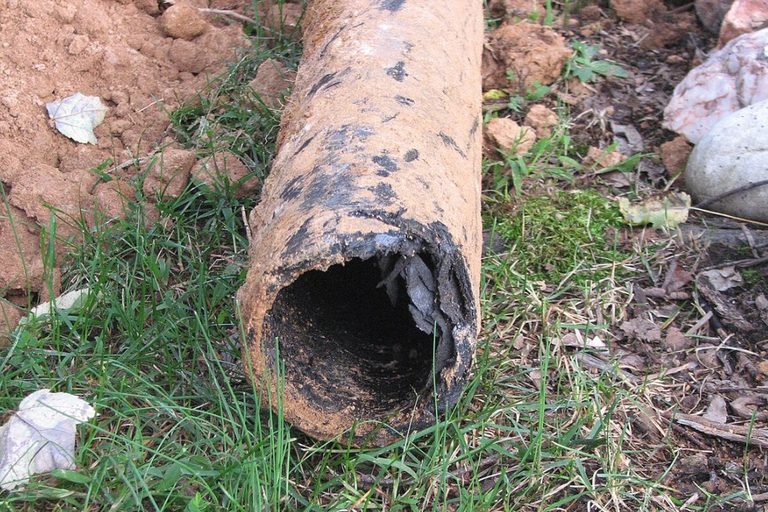
What an inspector looks for on sewer-scope video of Orangeburg pipe: out-of-round walls, blisters, roots, and separated joints.
Learn how to find your sewer cleanout, what plumbing codes require, who owns the sewer line, and what a scope or cleanout install costs.
You flush, hear a gurgle, and watch the water rise. If a plumber finds no sewer cleanout, that backup may be the first time you learn your home lacks one. A missing cleanout can make a main-line clog harder and more expensive to clear because the plumber may need to work through a sink, tub, or toilet.
Cleanouts are easy to overlook: standard home inspections do not require inspectors to confirm that enough are present, and older properties may never have had one installed. You can check your yard, learn what local rules require for new work, and know what to ask before buying or scheduling a repair.
A standard home inspection is not designed to find every missing cleanout, so the issue can surface when a main-line clog needs clearing. InterNACHI’s Standards of Practice do not require inspectors to determine whether there are sufficient cleanouts. Texas rules also exclude sewer cleanouts from the required inspection, and the Texas Real Estate Commission’s Standards of Practice set out the inspection requirements.
The Texas rules state that inspectors are not required to run a camera down the drain. ASHI’s newly approved 2026 standard uses the same “sufficient cleanouts” language and says a camera inspection is not required, though that standard is not yet in effect. InterNACHI’s current standard and ASHI’s current standard both leave underground items outside the inspection scope.
Older houses are a likely gap. Olympia, Washington, says many older properties lack a cleanout at the property line because one was not required when they were built. HomeGuide says most homes built after 1970 have cleanouts, though that claim does not establish a nationwide rate. Without a cleanout, the plumber may need to access the line through a sink, tub, or toilet; pulling a toilet adds labor and cost.
For new work, model plumbing codes generally require cleanout access near the connection between the building drain and building sewer, with spacing requirements along the sewer. Under IPC 708.1.3 and IRC P3005.2.3, a cleanout must sit at that junction or within 10 feet of developed length upstream. Pulling a toilet does not count as cleanout access.
Building sewers smaller than 8 inches need cleanouts no more than 100 feet apart under IPC 708.1.2 and IRC P3005.2.2. In UPC areas, the rule calls for a cleanout every 100 feet, plus one for each aggregate horizontal change of direction over 135 degrees. California’s CPC 719.1 allows the junction cleanout outside at the low end of the building drain, extended up to grade.
Local amendments change those details. Oklahoma extends the junction distance to 12 feet. Portland, Texas, reduces spacing to 80 feet and requires a two-way cleanout near the junction; its local amendment spells out the requirements. Los Altos Hills, California, adds a cleanout at the property line in a concrete box. Check your city or county’s adopted code and edition before planning work.
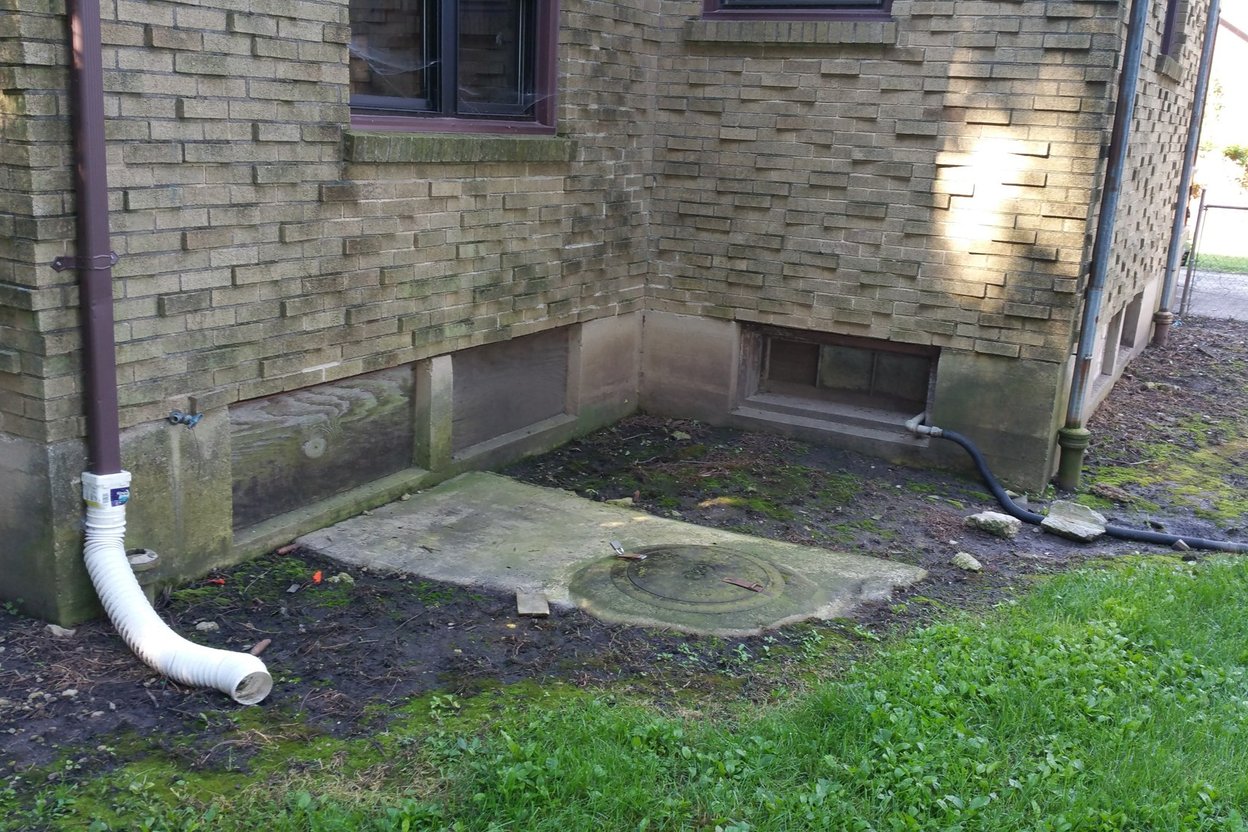
Walk the route from your foundation toward the property line or sidewalk, looking for a capped pipe that marks sewer access. HomeGuide describes a white or black pipe protruding from the ground, with a cap 3 to 6 inches across.
Olympia says a cleanout lid is about 6 inches wide, made of plastic or metal, and sometimes stamped “SEWER.” Look under plants, soil, or beauty bark if the route is covered. Olympia also directs owners to its online sewer map, which can help you trace the line.
Pay attention to noisy or slow drains and sewer odor inside or outside. A sinkhole in the yard is another warning sign listed by Olympia. If you find a cleanout during a backup, check whether it is overflowing, as Fresno recommends, and consider tree roots as a possible cause of trouble.
Lateral ownership varies by city, and a cleanout may mark the boundary between the owner’s responsibility and the utility’s. Check your own utility’s lateral page before you call a plumber or report a problem.
Fresno, California, makes the owner responsible for the entire lateral from the house to the main, including the portion under the sidewalk and street. Olympia assigns the city the section from the main to a cleanout in the right-of-way; without that cleanout, the owner is responsible all the way to the main, as explained on the city’s side sewer ownership page. Olympia also requires owners to clear blockages regardless of who owns the affected section.
Lynchburg, Virginia, owns the stretch from a city-approved cleanout, called a CACO, to the main. If there is no CACO, the owner is responsible for the full length.
A sewer scope inspection uses a camera to examine the line through a cleanout or roof vent, and the report notes when no cleanout is available. Under InterNACHI’s sewer scope standard, the inspector is not required to pull toilets.
The report must identify cracks, root intrusion, offsets over 1/4 inch, standing water deeper than 1 inch, blockages, and broken or collapsed pipe. You receive the video, which gives you and your inspector a record of the line’s condition.
Scope prices vary widely across the two published estimates. HomeGuide lists $125 to $500 for a scope, $175 to $750 when no cleanout means the toilet must come off, and $100 to $250 when the scope is added to a home inspection. Angi reports an average of $995, with a range of $271 to $1,725, and lists a standard camera inspection at $150 to $300. Those estimates do not agree, so ask what the quoted service includes before you book.
Adding a cleanout can cost from hundreds to several thousand dollars, with published estimates differing substantially. Angi puts a two-way cleanout at an average of $2,700, with a range of $1,400 to $3,500; a one-way cleanout costs $650 to $2,000. Permit fees range from $50 to $500 and sometimes reach $1,600.
HomeGuide estimates $2,000 to $5,000 for a two-way cleanout and $1,400 to $2,500 for a one-way. Olympia requires an owner-installed cleanout to meet city standards and have a post-construction video before the city takes over that section. Check local permit and ownership rules before authorizing installation.
Review your homeowners policy before a backup happens. Maryland says backup coverage costs extra and most policies will not pay to repair or replace the pipe itself. Michigan says water and sewer backup coverage is not automatic on a homeowners policy. Call your insurance agent and ask what backup damage and pipe repairs your policy covers.
What an inspector looks for on sewer-scope video of Orangeburg pipe: out-of-round walls, blisters, roots, and separated joints.
Is a $250 sewer scope worth it on an older home? See what a camera finds in old lines, what it misses, and what to ask for.
Learn who pays for a broken sewer pipe under the street or sidewalk, how to find your city's rule, and how to prove where the break is.