Plumbing
No cleanout. The backup is how people find out
Learn how to find your sewer cleanout, what plumbing codes require, who owns the sewer line, and what a scope or cleanout install costs.
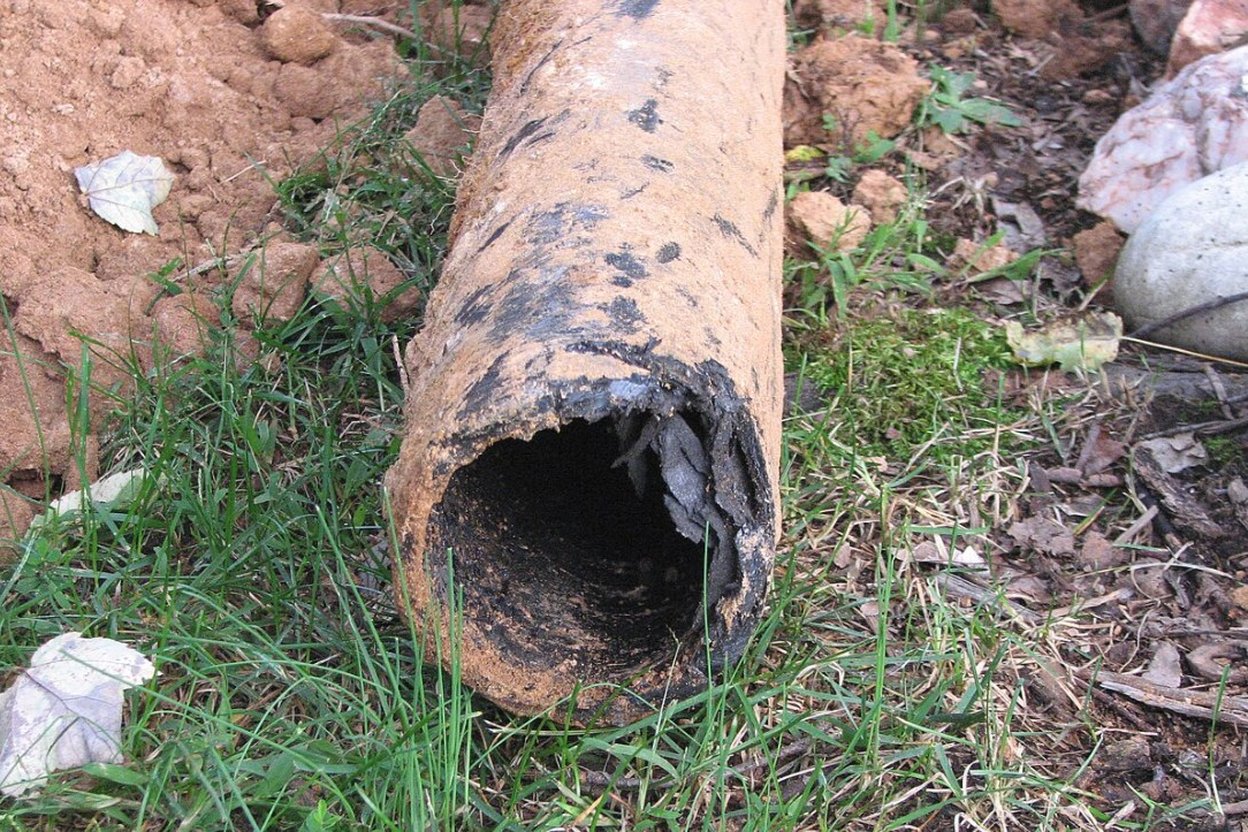
What an inspector looks for on sewer-scope video of Orangeburg pipe: out-of-round walls, blisters, roots, and separated joints.
When you get a sewer-scope video for an older home, the pipe’s shape and joints deserve close attention. On camera, an inspector looks for Orangeburg’s out-of-round walls, blisters or peeling layers, root intrusion, and separated joints. Those signs can indicate a sewer lateral that needs replacement.
Orangeburg is black bituminous fiber pipe, so its name does not describe its color. A camera scan can offer clues, though video alone may not confirm the pipe material.
The camera is looking for a black pipe that has lost its round shape, along with wall damage, roots, or joints that have separated. Orangeburg is bituminous fiber pipe made from layers of wood or plant fiber soaked in coal-tar pitch. It served many home sewer laterals from the late 1940s to the early 1970s.
On the video, the cross-section may look oval, egg-shaped, or flattened. The bottom can appear pushed up into the pipe. Inspectors also watch for blisters on the wall, peeling or delaminating layers, roots at joints, and joints that have pulled apart.
Orangeburg is black, not orange. On many homes, the lateral runs from a few feet outside the foundation to the main sewer line. In Ann Arbor, a change in material appears about 5 feet outside the foundation on typical local houses; the transition point varies by location.
One camera image alone may not identify the material with certainty. On an older home, visible deformation, delamination, or separated joints are reasons to plan for replacement. Cleaning may leave damaged pipe in place, and a deformed cross-section can prevent cleaning from working properly.
Orangeburg fails as its fiber-and-pitch walls soften, deform, or separate. Made by Fiber Conduit Co., later Orangeburg Manufacturing, in Orangeburg, New York, it saw heavy use after World War II. The company advertised a 50-year life and resistance to roots; PVC replaced Orangeburg in the 1970s, and the manufacturer closed in 1974.
Soil pressure can flatten softened pipe. As the pitch dries, roots can enter at joints. Shifting bedding can pull joints apart, opening gaps along the run.
Solvents and paint thinner poured down drains can dissolve bitumen and damage the pipe. The deterioration can start inside the wall, so a pipe that looks round from outside may already be deformed on the inside.
The camera helps reveal that internal shape and surface condition. A round-looking section elsewhere in the line does not establish that the full run is sound; each visible segment and joint needs review.
Use the video to track material changes, pipe shape, wall condition, joints, and any areas where water or debris blocks the view. Pause at each finding and record its distance from the camera entry point.
InterNACHI’s sewer-scope standard requires the inspector to report egg-shaped, crushed, or collapsed pipe and delamination or deterioration as conditions needing correction. The inspector is not required to identify Orangeburg by name.
Ask directly: “Is this bituminous fiber pipe, and how much of the run is it?” That gives you a clear follow-up on both the likely material and the length affected. A scan may provide clues to the pipe type, while the reported deformation or deterioration describes the visible condition.
Your repair options include digging and replacing the line with PVC, pipe bursting, or lining, with suitability tied to the pipe’s condition. Ann Arbor’s Building Department warns that snaking or cutting can further damage Orangeburg; cleaning needs a round cross-section to work.
A partial repair can leave more Orangeburg farther along the run. Ask the contractor to identify the repair limits and show where the remaining pipe changes material or condition.
Before you buy, check whether your city keeps sewer-replacement records. Ann Arbor has kept a list of addresses with sewer replacements since the mid-1980s. If the scope shows a problem, negotiate a repair or credit before your inspection deadline.
As an owner, keep solvents and paint thinner out of drains because they can dissolve the pipe’s bitumen. If excavation uncovers Orangeburg, let the contractor handle and dispose of it; some Orangeburg contained asbestos, while the material varied by maker and era.
Learn how to find your sewer cleanout, what plumbing codes require, who owns the sewer line, and what a scope or cleanout install costs.
Is a $250 sewer scope worth it on an older home? See what a camera finds in old lines, what it misses, and what to ask for.
Learn who pays for a broken sewer pipe under the street or sidewalk, how to find your city's rule, and how to prove where the break is.