Plumbing
Does homeowners insurance cover a failed sump pump?
Standard policies often exclude sump pump overflow. Learn what the endorsement pays, what it leaves out, what it costs and how to avoid denial.
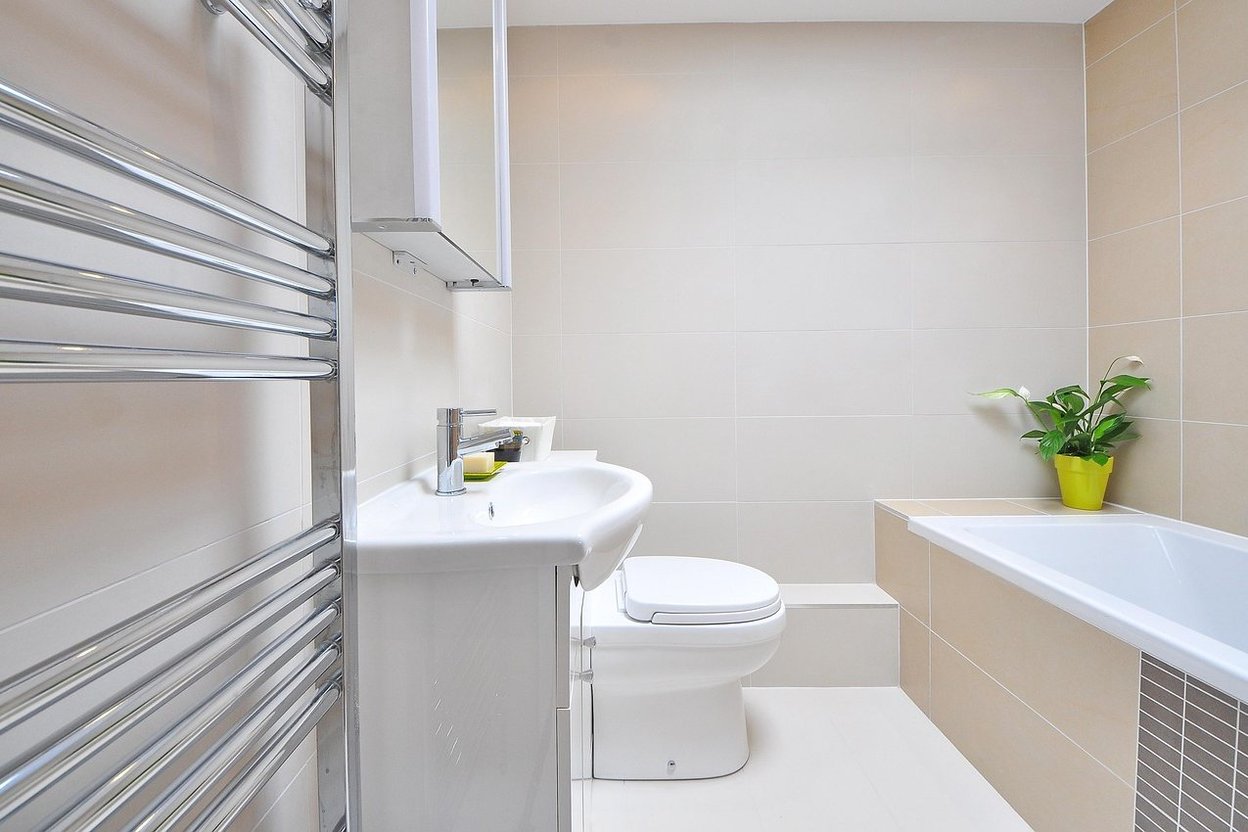
Learn which parts of a guest bathroom fail after a year of disuse, from dry drain traps to toilet seals and stale water, and how to check each one.
You open the guest bathroom door for the first time since last fall, with Thanksgiving visitors due in a few weeks, and a faint sewer smell hits you. Or you're touring a vacant house and its spare bath smells stale. A bathroom left unused for a year rarely has one big failure. It has several small ones caused by sitting still: dry drain traps, tired toilet parts, stale water in the pipes, and damp air that never moved. Most of these take minutes to check and are cheap to fix. Here's what to look for, in order.
Disuse causes nearly all of it. Plumbing is built to be used, and several parts depend on water moving through them.
Here's what happens over a quiet year:
That gives five areas to check: drain traps, the toilet's seal to the floor, the toilet tank parts and supply line, the water in the pipes, and the fan and surfaces. In most cases the fix is running water, a cheap part, or a cleaning, not a renovation.
Under the sink, and under the tub and shower drains, is a U-shaped pipe called a P-trap. It holds a small amount of water that blocks sewer gas from coming up the drain. When that water evaporates, the smell comes into the room (PuroClean).
How to check: Smell each drain up close. If the odor is strongest at the sink or tub drain, a dry trap is the likely cause.
The fix: Slowly pour about a gallon of water into each drain. To slow evaporation, you can float a small amount of mineral oil on top of the trap water. To prevent it from happening again, run water in rarely used drains at least weekly, or have a plumber install a trap primer, which adds water to the trap automatically (PuroClean).
If the smell is at the floor by the toilet, look at the seal under the toilet instead. A failed wax ring between the toilet and the drain can let sewer odor out, sometimes with water around the base. If the toilet rocks, it may be sitting on a broken flange, or on subfloor that has gone soft from a slow leak (Enercare). First try snugging the two bolts at the base, gently, because over-tightening can crack the porcelain.
If the smell comes back a few days after you refill every trap, the plumbing vent on the roof may be blocked by leaves, a nest or rust, which can push sewer gas into the room (RC Flood). Hire a roofer or plumber to check it. Don't climb up yourself.
Once you've dealt with the smell, check the toilet tank and the hose that feeds it.
The flapper is the rubber seal at the bottom of the tank. A typical flapper lasts about 3 to 5 years (Bob Vila; HomeAdvisor). HomeAdvisor says drop-in tank tablets and harsh cleaners can cut that life in half. A flapper that has dried out or warped may not seal well.
What to look and feel for:
A flapper is a common DIY part. Shut off the water at the valve behind the toilet, flush to empty the tank, and swap it.
The supply line runs from the wall valve to the tank. An insurance-claims review by the law firm Cozen O'Connor traces many supply hose failures to chlorine-based cleaners, which can crack the stainless braid. It also blames overtightening and tool marks on the nuts (Cozen O'Connor). Look for rust spots, frayed or kinked braid, bulges, and moisture at either nut. When you replace a line, avoid braided lines with plastic nuts, which can burst (Anytime Plumbing). Tighten by hand, plus a small turn with a wrench at most.
If you're replacing the fill valve, plan on replacing the supply line too. An old hose's washer may not reseal against a new valve.
The water in the pipes deserves the same attention as the toilet. Water that has sat for months can lose its disinfectant, the chlorine your utility adds, down to low or undetectable levels, and that lets Legionella grow (Nashville Water Services). North Carolina's health department advises flushing faucets and showerheads that have gone unused for 3 or more days (NCDHHS). A guest bath left closed for a year is far past that.
Flush every outlet. Run hot and cold water through the sink, tub and shower. Keep the hot water running until it reaches its maximum temperature, ideally 120°F or higher (CDC). Bacteria are spread by breathing in mist, so keep spray and splashing low. Run the tub spout before the showerhead, keep your face away from the spray, and keep the door open or the fan on.
Clean showerheads and faucet aerators. Unscrew them and scrub off sediment and buildup before you put them back.
Ask whether the water heater needs draining. If the guest bath shares a water heater with the rest of the house and the house is in daily use, the tank water is already turning over. In a home that has stood vacant, it matters more. CDC guidance says to check whether the manufacturer recommends draining the heater after long disuse, and to keep the heater at 140°F or higher (CDC). Maine CDC lists fully flushing the heater after a week or more away, and warns that sediment can clog the drain valve (Maine CDC). If you raise the temperature to flush, set it back to 120°F or lower afterward to prevent scalding (WSSC Water). A gas heater, or a drain valve that won't open or close cleanly, is a good reason to call a plumber.
Flushing the pipes puts warm moisture into the air, so turn on the exhaust fan now and check it.
Does it run and pull air? Hold a single square of toilet paper up to the grille. It should be drawn flat against it. A fan that hums but doesn't pull may have a stuck damper or a clogged duct.
Where does it vent? The duct should end at a roof cap or a wall vent outside. A fan that empties into the attic or crawlspace moves moisture to places where it causes hidden damage (Homestyler). From the attic, follow the duct with a flashlight. Outside, look for a vent flap that opens when the fan runs.
Look for mold. Still air raises humidity, and mold and mildew usually show up in ceiling corners, grout lines and around fixtures, along with a musty smell (Environix). You can clean small surface spots on tile and grout yourself. Mold can also grow inside walls, so a musty smell with no visible source, stained or bulging drywall, or growth that keeps coming back calls for a professional inspection (Environix).
Before the first holiday guest arrives, or while walking through a vacant house, go in this order:
Call a licensed plumber if the toilet rocks after you've snugged the bolts, if there's water or a smell at the base (that usually means a wax ring or flange job, and possibly subfloor repair), if the shutoff valve leaks or won't turn, or if a gas water heater needs draining. Call a mold specialist for anything larger than a small surface patch, or for any sign of mold inside the walls.
Photo by midascode on Pixabay.
Standard policies often exclude sump pump overflow. Learn what the endorsement pays, what it leaves out, what it costs and how to avoid denial.
Learn how to find your sewer cleanout, what plumbing codes require, who owns the sewer line, and what a scope or cleanout install costs.
What an inspector looks for on sewer-scope video of Orangeburg pipe: out-of-round walls, blisters, roots, and separated joints.