Seasonal Checklists
Attic condensation when you turn the heat on
Frost on attic roof nails usually means warm indoor air is leaking in, not a roof problem. Here's how to spot it and which fixes to do first.
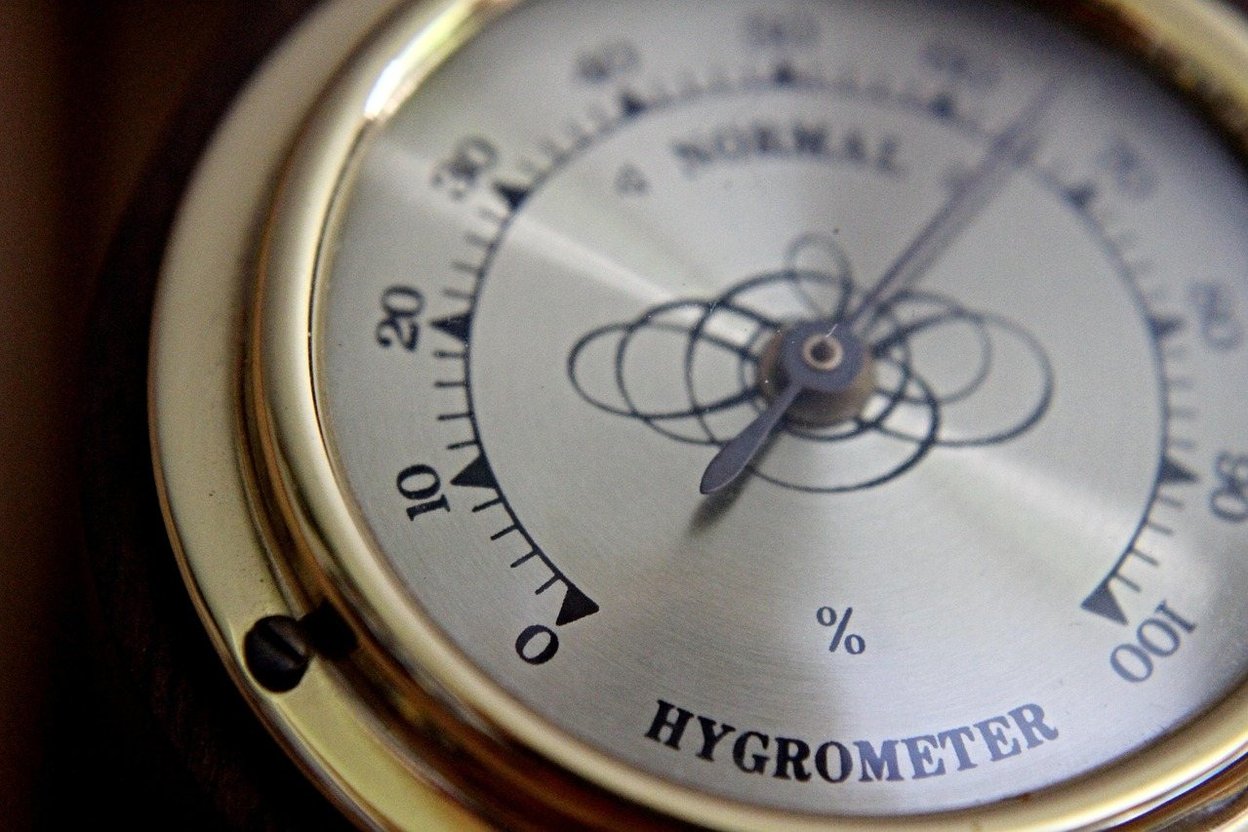
Learn the indoor humidity target for winter (30–40%, lower in deep cold), how to measure it, and how to adjust it to stop window condensation.
The furnace kicks on for the first cold nights of fall. A week later you get a static shock off the doorknob, or you wake up to fogged bedroom windows with water pooled on the sill. Both point to the same question. For most homes, keep indoor relative humidity at about 30–40% in winter, and go lower as it gets colder outside. Below is the number, how to check it, and how to adjust it as the season changes.
Relative humidity (RH) is how much water vapor the air holds compared with the most it could hold at that temperature.
The numbers that matter:
So 30–40% is a winter setting inside the broader healthy range. It isn't an official government figure. HVAC and building sources agree on it because of what happens to humid air when it touches a cold surface. The EPA's guidance doesn't set a separate number for winter.
What 30–40% means in practice depends on the weather. A setting that's fine on a 35°F November day can soak the window frames during a January cold snap.
Warm indoor air carries moisture. When that air touches a surface colder than its dew point, the moisture condenses into water. In winter, the coldest surfaces inside are window glass, window frames, and walls with thin or missing insulation. The Fenestration and Glazing Industry Alliance (FGIA), the window industry's trade group, puts it this way: the higher the relative humidity, the warmer a surface has to be to stay dry. Under the right conditions, condensation on windows, doors and skylights is to be expected.
As it gets colder outside, those surfaces get colder too, so indoor air has to be drier to keep them dry. Here's the recommended maximum indoor RH by outdoor temperature. It comes from the Minnesota Center for Energy and Environment and the FGIA, and assumes the house is kept at 70°F:
These are ceilings, not exact settings. Carrier says the right level depends on your windows, insulation and construction. Single-pane or worn-out windows and under-insulated walls run colder, so they fog at lower humidity than the chart suggests. The Minnesota Center for Energy and Environment warns that in extreme cold, even 40% can cause problem condensation on windows and walls. The chart is a starting point, and your windows will show you whether to go lower.
This matters most in cold-winter regions like the upper Midwest, the Northeast, the northern Plains and the mountain West. In mild-winter areas, the colder rows of the chart may never apply.
You can't judge humidity by feel with any accuracy. You need a hygrometer, a small humidity meter. The EPA describes it as an inexpensive instrument, about $10–$50, sold at many hardware stores. Many smart thermostats also show indoor humidity, and Carrier suggests either one for tracking it.
To get a reading you can trust:
Check two rooms in particular. Bedrooms often run humid overnight: doors stay closed, people breathe for eight hours, and the windows are cold. Basements stay cool and pick up moisture from the ground, so they often read higher than the floors above.
If you're a buyer at a showing, a pocket hygrometer is a fair thing to bring along. A high basement reading tells you something the listing photos won't.
The house shows you which way it's off.
Signs of too much humidity:
Mayo Clinic notes that too much humidity can cause condensation on walls, floors and other surfaces. That dampness can encourage bacteria, dust mites and mold, which can trigger asthma and allergy flare-ups.
Signs of too little humidity:
When to worry: dry-air signs are mostly about comfort and wear on wood, and they're easy to fix. Moisture signs need faster attention. Water on window frames, a smell you can't trace, and mold can all mean water damage that keeps building after you stop seeing it.
Once you know the reading, adjust your equipment to match the weather.
If you run a humidifier:
If you see condensation:
If condensation shows up with no humidifier running, the problem may not be the air. The Minnesota Center for Energy and Environment says this can point to inefficient windows or under-insulated walls, which run cold enough to fog even at modest humidity.
In the basement, set a dehumidifier to about 55% RH to discourage bacterial growth, and lower it if the space still feels damp.
Some moisture problems go beyond adjusting a setting. Call a professional when you see:
Which pro depends on the problem:
Get it checked before the coldest weeks of winter. Moisture problems are easier to find and fix early.
Photo by rschaller98 on Pixabay.
Frost on attic roof nails usually means warm indoor air is leaking in, not a roof problem. Here's how to spot it and which fixes to do first.
The first furnace run of fall often smells like burning dust. Learn what's normal, when the smell means shut it off, and when to leave the house.
Most AC units don't need a full winter cover, which traps moisture and invites pests. Learn when a top-only cover helps and why heat pumps stay bare.