Inspection FAQ
Credit or repairs. What buyers are asking for after the report
Compare a repair credit, completed repairs, and a price cut after a home inspection, with loan limits and how to get terms in writing.

Diagnose why windows sweat in winter: is it condensation, a failed seal, dew, or a leak? Where moisture sits tells you what to fix.
On one of the first cold mornings of fall, you open the blinds and find beads of water along the bottom of the glass and a damp sill below. Usually that is humid indoor air meeting cold glass, and fans and a lower humidity setting will fix it. Water on a window can also mean a failed glass seal, harmless outdoor dew, or rain getting into the wall. Where the water sits tells you which one you have, and each one has its own fix and its own pro.
Condensation forms when a surface is colder than the dew point of the air touching it. In winter the window glass is usually the coldest surface in a room, so it shows up there first. There are four places to look:
New or newly remodeled houses often sweat during their first heating season while the building materials dry out. Houses can also sweat for a few weeks after a humid summer.
The Environmental Protection Agency (EPA) recommends keeping indoor relative humidity (RH) below 60%, and ideally between 30% and 50%. A hardware-store humidity meter costs roughly $10 to $50 and will tell you where you are. That 30–50% band is a mold and comfort range, though. In a hard freeze, 45% will still fog the glass. Here are the recommended maximum indoor RH levels for a 70°F room, based on University of Minnesota studies and the Canadian CSA A440.2 user guide:
The type of glass matters a lot. An older University of Minnesota cold-climate guide measured the center of the glass with a 15 mph wind outside. At 20°F outdoors, single glass sweated at about 24% indoor RH, while sealed double glass held out to about 47–50%. At 0°F the figures were about 12% for single glass and about 32–37% for double. Treat those as an approximate comparison. They don't promise anything about a modern low-e, gas-filled unit, which can stay warmer.
Here is how the dew point works out, using Pella's example. It's 0°F outside and the room is 70°F at 40% RH, so the room air's dew point is 44°F. The glass is at 43°F, so it sweats. Drop the room to 30% RH and the dew point falls to 37°F, so the same glass stays clear.
Charts flatter real windows. The edge of the glass and the frame run colder than the center, because the spacer and frame conduct heat. Closed blinds, curtains and deep sills keep warm room air off the glass. Pella also notes that the upper sash of a hung window can run a few degrees colder than the lower one. Tight, well-insulated houses tend to sweat more, because less dry outdoor air leaks in to carry moisture out. Even ENERGY STAR windows can sweat. If you're comparing new windows, look at the Condensation Resistance number on the NFRC label, which runs from 0 to 100, with higher being better. Compare products within one rating system rather than mixing systems.
Water on the glass is an early warning. The same moisture can condense inside walls, attics and crawl spaces, where it stains finishes and can damage the structure. The glass hasn't failed. The humidity is the thing to fix.
A pin-type moisture meter pushed into the stool or sash tells you more than a puddle you can wipe up. Interior trim is typically installed at about 6–10% moisture content. Wood isn't expected to decay below 20%, decay becomes possible above that, and it's expected above about 30%. You can clean a small moldy patch, under about 10 square feet (roughly 3 by 3 feet), with detergent and water and then dry it. Don't paint or caulk over mold. For larger areas, or if anyone in the house has health concerns, call a contractor with mold-cleanup experience.
Fog, droplets, frost or a milky film between the panes means the edge seal on the insulated glass unit has broken. So do mineral spots or dirt in that sealed gap. It isn't a rain leak, and changing the humidity won't clear it. The window may also feel drafty or much colder than its neighbors. You have three options, and each is a different job:
Replacing the glass unit is work for an insured window or glass contractor. The glass is heavy, and some warranties require a certified installer or are voided by improper installation. Before you call, check your paperwork and look for a date on the spacer to see whether seal coverage still applies. If the house was built before 1978, assume it has lead paint until a lead professional says otherwise. Anyone scraping or replacing that window has to use lead-safe work practices.
Many windows are designed to let some water into the frame and drain it outside through small weep holes at the bottom of the exterior frame. When those holes are clogged, or someone has caulked them shut, water fills the frame and spills onto the sill or into the wall.
You can test them yourself using a method from the Department of Energy's Pacific Northwest National Laboratory. Pour a glass of water into the track, or mist the outside glass, and watch for water coming out of the exterior weeps. If it doesn't, clear the debris with a pipe cleaner, small brush or hook, taking care not to shove it deeper, then test again. Never caulk weep holes.
If the water keeps coming after the weeps run clear, or the perimeter caulk has failed, call a window contractor. Angi lists leaking-window repair at $100 to $600 (checked October 7, 2026). HomeGuide lists sill replacement at $250 to $800, and a rotted frame averages $250 to $800 on Angi. Second-story access costs extra. Other problems belong to other pros:
On a clear, calm, humid night, often around sunrise, the outer pane can drop below the outdoor dew point. It can also happen on a hot, humid day while the air conditioner is cooling the glass from inside. Efficient low-e glass dews more often because less indoor heat reaches the outer pane.
Pella gives an example from a 50°F night with a 48°F dew point. A triple-pane low-e argon unit's outer glass sat at 47°F and dewed. A clear dual-pane unit's outer glass sat at 55°F and stayed dry, because more of the house's heat leaked out through it. Dew that burns off with sun or wind is not a broken seal and not a reason to replace the window.
Photo: happy holidays by Robert Couse-Baker, BY 2.0.
Compare a repair credit, completed repairs, and a price cut after a home inspection, with loan limits and how to get terms in writing.
Learn why an inspection report is not a repair list, how to sort findings into repair, monitor, and evaluate, and make a focused request.
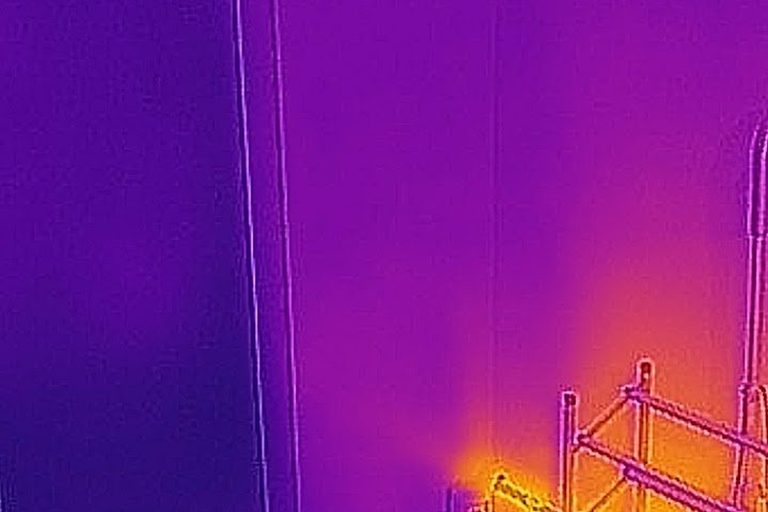
A thermal camera flags possible moisture, missing insulation, air leaks and hot wiring. Learn what a scan can and can't confirm, and what it costs.