Safety
Water Heater Temperature: Why 120°F Is the Right Setting, and How to Check Yours
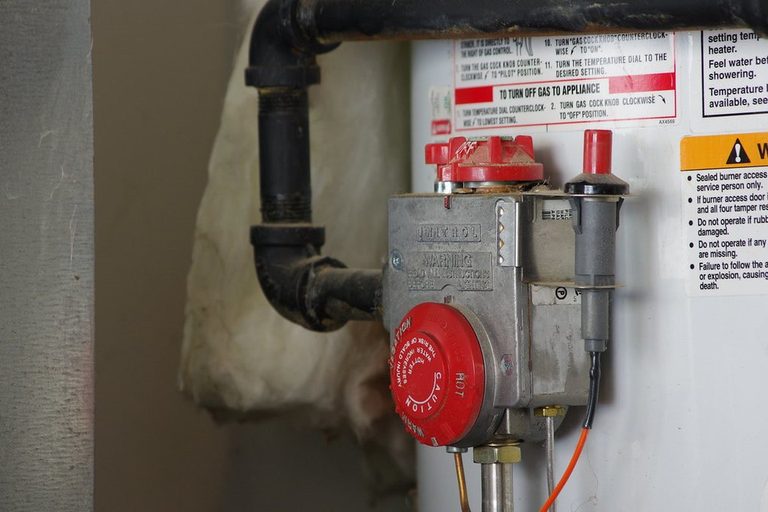
Why 120°F is the recommended water heater setting for safety and energy, and how to measure your tap temperature in about five minutes.
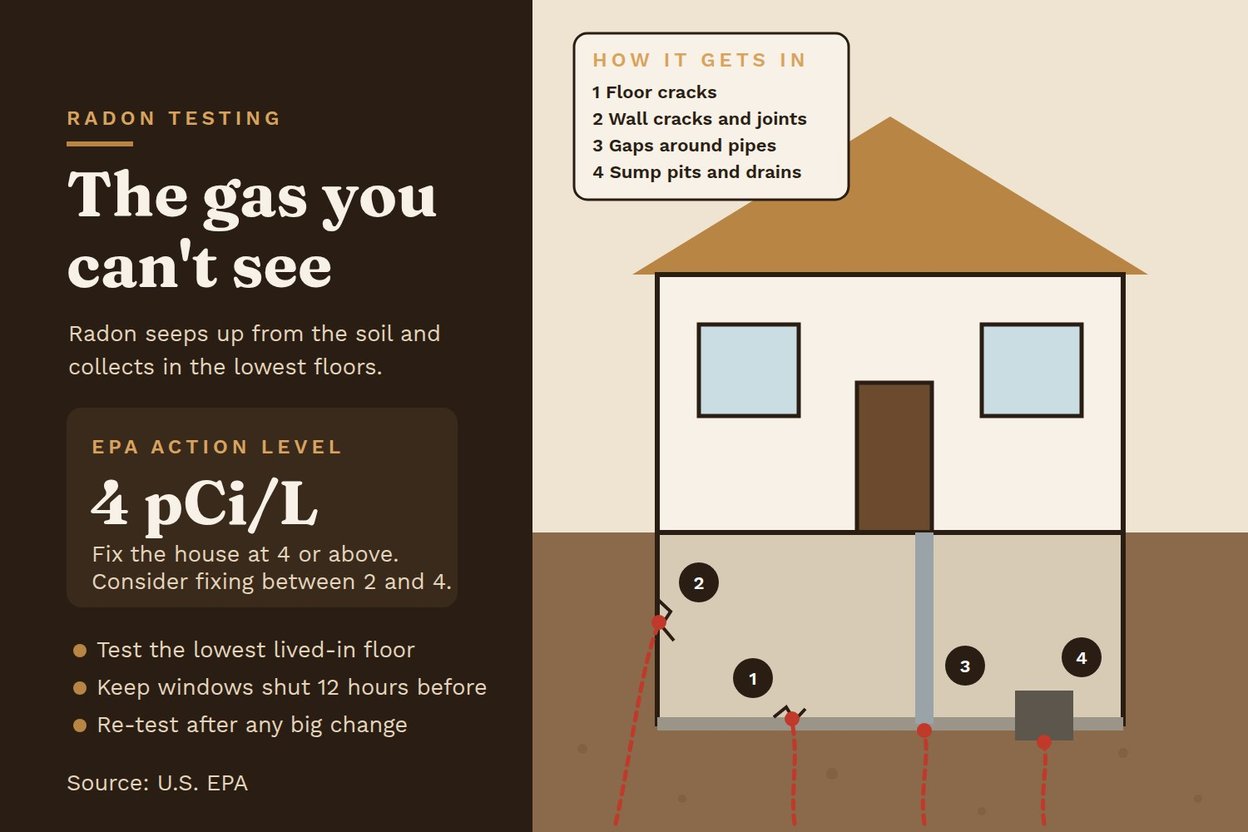
Radon is an invisible gas from the soil and a leading cause of lung cancer. How to test your house yourself, what the EPA's 4 pCi/L action level means, and what fixing it involves.
Radon is a radioactive gas that comes up from the soil. You can't see it, smell it or taste it, and it can build up inside a house, especially in the basement and lower floors. The EPA says radon is the second leading cause of lung cancer in the U.S. after smoking, and the leading cause among people who don't smoke.
The good news: testing is cheap and easy, and high levels can be fixed.
Radon forms naturally when uranium in soil and rock breaks down. It moves up through the ground and into a house through:
Any home can have high radon: new or old, drafty or tight, with or without a basement. Levels can be very different even between neighboring houses, so the only way to know is to test.
Radon is measured in picocuries per liter of air (pCi/L).
Winter is a good time, since houses are closed up, but you can test year-round.
Short-term tests (2 to 90 days) give a quick snapshot. Long-term tests (more than 90 days) give a better picture of the yearly average. If a short-term test comes back high, the EPA suggests a second test to confirm before you fix it.
Continuous electronic radon monitors are another option; they show levels in real time.
In a real estate deal, a short-term test is common. The EPA's guidance for home buyers and sellers covers test placement and timing. A certified radon tester can run the test so it holds up in negotiations.
The most common fix is sub-slab depressurization: a pipe through the basement floor and a fan that pulls radon from under the house and vents it above the roof. It's a proven, widely used system. Sealing cracks helps but usually isn't enough on its own.
Hire a contractor certified by your state or a national radon certification program. After the system is installed, test again to make sure it worked.
Your state radon program has local information, and the EPA's "A Citizen's Guide to Radon" is the standard plain-English guide.
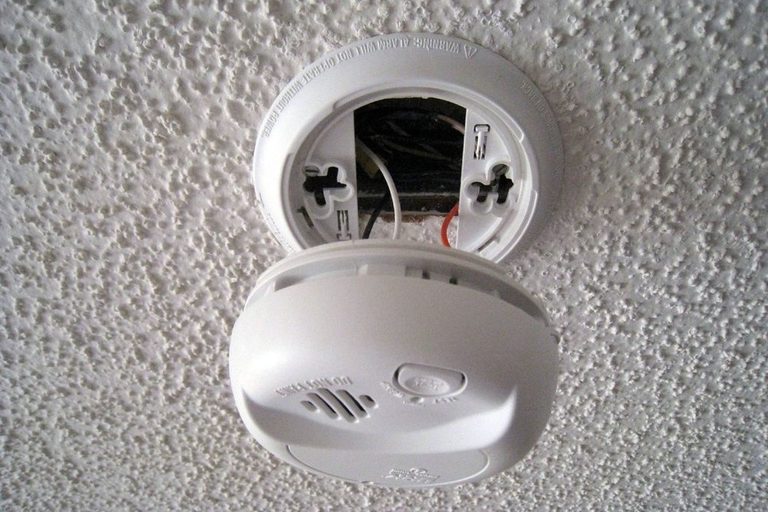
Add a radon test to your list along with checking your smoke and CO alarms.
Why 120°F is the recommended water heater setting for safety and energy, and how to measure your tap temperature in about five minutes.
Test your CO alarms and learn what each beep means. This guide covers testing procedures, sound patterns, when to replace units, and safety steps.
A 10-minute check for Halloween and holiday lights: safety labels, outdoor-rated cords, GFCI outlets, overloaded circuits and the warning signs of a cord about to fail.