Safety
Water Heater Temperature: Why 120°F Is the Right Setting, and How to Check Yours
Why 120°F is the recommended water heater setting for safety and energy, and how to measure your tap temperature in about five minutes.
Test your CO alarms and learn what each beep means. This guide covers testing procedures, sound patterns, when to replace units, and safety steps.
The first cool evening comes, you switch the thermostat to heat, and the furnace runs for the first time since spring. Before that happens, go to every carbon monoxide (CO) alarm in the house, press its test button, and listen for four beeps, a pause, and four more beeps. Then take each unit down and read the date on the back. The button test tells you the alarm can still make noise. The date tells you whether its sensor is too old to rely on. You need both checks, plus a technician to look at the furnace.
The test you can do yourself is the manufacturer's test button. Do it on every unit in the house. Warn everyone first, because the horn is loud. Kidde lists an 85-decibel horn on its smoke/CO alarms, and the Kidde C3010 manual says to cover the sounder with your fingers during the test because long exposure can harm your hearing.
Here is what a pass looks like on two common units:
Both of these manuals say to test once a week. CPSC and NFPA say to test at least once a month. Monthly is the minimum. If your manual asks for weekly, follow the manual.
Don't test the alarm by holding it near a car's exhaust pipe. Kidde says this is dangerous and doesn't give a reliable result. Universal Security Instruments says exhaust or any other CO source can damage the sensor and void the warranty. Use the test button.
A unit can pass the button test and still be past its useful life. CPSC says the test button checks whether the circuitry is working, not whether the sensor is accurate. Some First Alert/BRK units send an electrical check signal through the sensor circuit, but even that is not a test with actual CO gas.
So while you have each unit down, read the date. First Alert says the date on the back is when the unit was made, not when it expires. How long an alarm lasts depends on the brand and model:
Check the label and the manual for your own model.
It also helps to know what the alarm is built to ignore. Under the UL 2034 standard, a home CO alarm must sound within 60 to 240 minutes at 70 parts per million (ppm), within 10 to 50 minutes at 150 ppm, and within 4 to 15 minutes at 400 ppm. BRK says a unit built to that standard is designed not to go off at a steady 30 ppm, even for 30 days. The point is to avoid false alarms from brief spikes during normal appliance use while still warning you before CO makes it hard to react. CPSC notes that most people have no symptoms between about 1 and 70 ppm, although some people with heart disease can get chest pain in that range.
Four beeps, a pause, four beeps, repeating: this is the CO alarm on both Kidde and First Alert. Get out of the house.
Single chirps mean the unit needs maintenance, and the meaning depends on the brand:
Numbers on a display: On a Kidde digital unit, seeing 888, then a number around 200, then 888, then 0 during a button test is a programmed self-check, not a CO reading. If a number appears when nobody pressed the button, Kidde says to treat it as CO: leave the house and call 911. The Peak Level button shows the highest reading stored since the last reset. Kidde says paint fumes or a spray used too close to the unit can cause a peak reading, but so can real CO. To clear it, hold Peak Level and Test/Reset together for 2 seconds, then keep an eye on the unit.
On the CO605, pressing Silence quiets the horn for about 4 minutes while the sensor keeps checking the air. If CO is still present, the horn starts again. Never pull the batteries to stop an alarm.
If the CO alarm pattern sounds, CPSC says not to look for the source. Go outside, call 911, make sure everyone is out, and stay outside until responders say it's safe.
CPSC says to put an alarm on every level and outside each sleeping area. Use a battery alarm, or a plug-in or hardwired alarm with battery backup, listed to UL 2034. CPSC recommends interconnected alarms. Keep alarms away from heating vents, the kitchen, the spot directly above a fuel-burning appliance, and anywhere furniture or drapes would cover them. If a guest room will be used for Thanksgiving, check that it's covered too.
Local codes vary, and they don't always match CPSC's advice. California is a good example:
CPSC, by contrast, says not to put alarms in basements unless someone sleeps there. Follow your local code and the manufacturer's height instructions. Your local building official can tell you which rules apply to your house.
At each unit:
If a unit with a replaceable battery chirps for low battery or stays silent during the test, put in a fresh battery and test again. First Alert says to replace batteries at least once a year with Duracell, Energizer, or Eveready, and not to use rechargeable batteries. Kidde also says to check that the batteries are seated properly and to clean off dust before retesting. If the unit still fails, replace it.
Replace the whole unit if it is sealed, past its date, giving an end-of-life signal, or still silent after a new battery. On October 7, 2026, Home Depot listed the Kidde 10-year sealed-battery CO alarm (COB10) at $43.97 and the Kidde 10-year battery smoke/CO combination alarm (21031514) at $59.97. Lowe's Pro Supply listed the Kidde C3010 at $60.75 and the same combination alarm at $79.98. These are prices for specific models, and store prices can differ.
Replacing a hardwired alarm means working on house wiring. If you're not comfortable shutting off the breaker and redoing the connections, hire a licensed electrician. California generally requires house-wired alarms with battery backup. Battery-only or plug-in alarms are allowed in existing homes built before January 1, 2011, as long as the alarm locations aren't being opened up during construction. California law has required CO devices in existing single-family homes with fuel appliances, fireplaces, or attached garages since July 1, 2011. A violation can bring a fine of up to $200 after a 30-day notice to fix it. Landlords must keep the devices working.
A CO alarm warns you about a problem. It doesn't prevent one. CDC says a qualified technician should service the furnace, water heater, and any other gas, oil, or coal appliance every year, and the chimney should be checked or cleaned every year. CPSC says that inspection should include the flues and vent pipes, looking for blockages, corrosion, and loose or disconnected sections. Book that appointment before the first cold night.
A few rules that apply all season:
These risks are real. CDC says more than 400 Americans die each year from CO poisoning not linked to fires, more than 100,000 go to an emergency department, and more than 14,000 are hospitalized. NFPA's 2023 figures show 82,245 CO incidents that needed a fire department response. They also show 79,051 alarm malfunctions and 79,286 calls where no CO was found. Even so, treat every alarm as real until responders clear the house.
Early CO poisoning feels like the flu without a fever: headache, fatigue, shortness of breath, nausea, and dizziness. People who are asleep can die before they notice any symptoms. If anyone in the house has these symptoms, CPSC says to act even if the alarm is quiet: go outside, call the fire department from outside, and tell a doctor you suspect CO. Have a qualified technician check your appliances before you use them again. If the alarm goes off again within 24 hours, leave again and call a qualified technician.
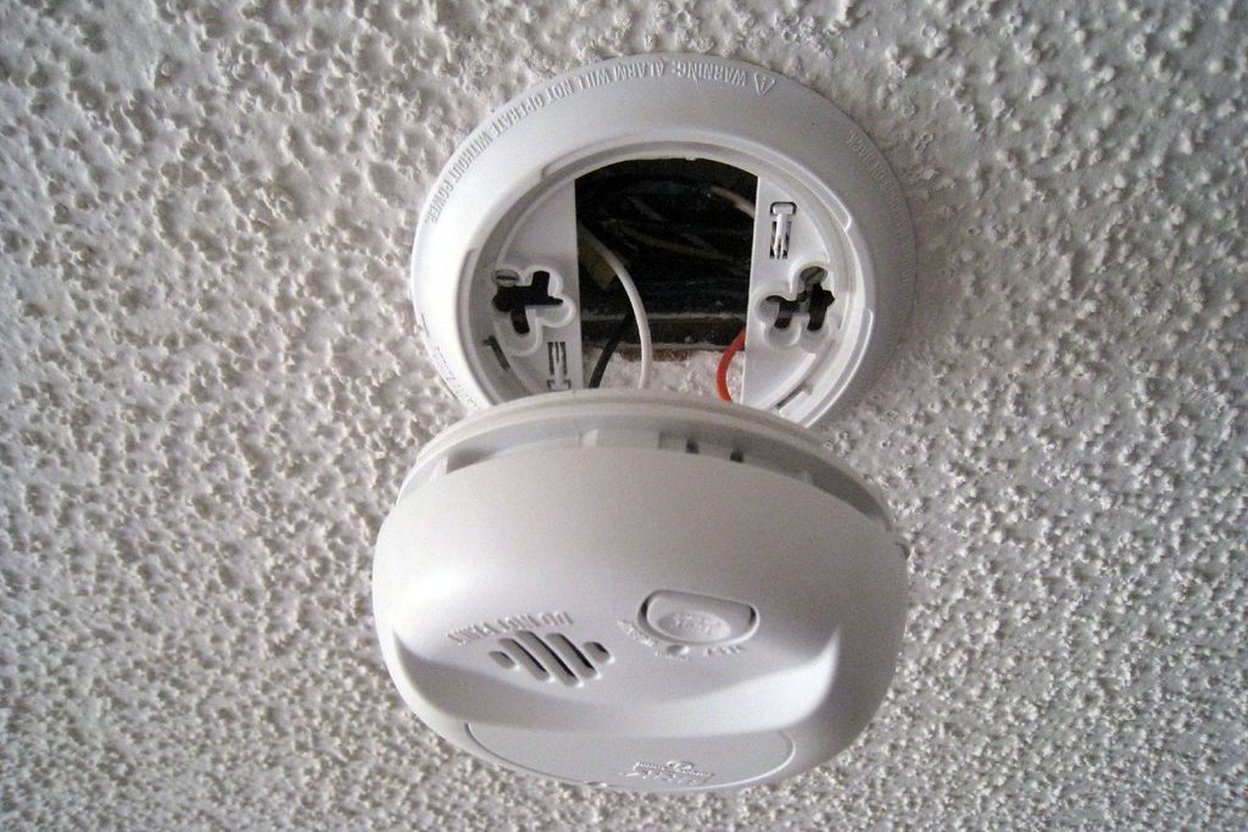
Photo: smoke detector (05-04-08) by sun dazed, BY-SA 2.0.
Why 120°F is the recommended water heater setting for safety and energy, and how to measure your tap temperature in about five minutes.
A 10-minute check for Halloween and holiday lights: safety labels, outdoor-rated cords, GFCI outlets, overloaded circuits and the warning signs of a cord about to fail.
What to look for on your electrical panel without taking the cover off: the brands electricians worry about, scorch marks, rust, double taps, and when to call an electrician.