The first chilly evening of fall, everyone wants a fire. Before you light it, take ten minutes to check the fireplace and chimney. Chimney fires and carbon monoxide problems usually start with things you could have spotted.
01Get it inspected once a year
The National Fire Protection Association's standard calls for chimneys, fireplaces and vents to be inspected at least once a year, and cleaned as needed. A certified chimney sweep checks things you can't see from the hearth. If you use your fireplace or wood stove often, this is the most important item on the list.
02What you can check yourself
Inside
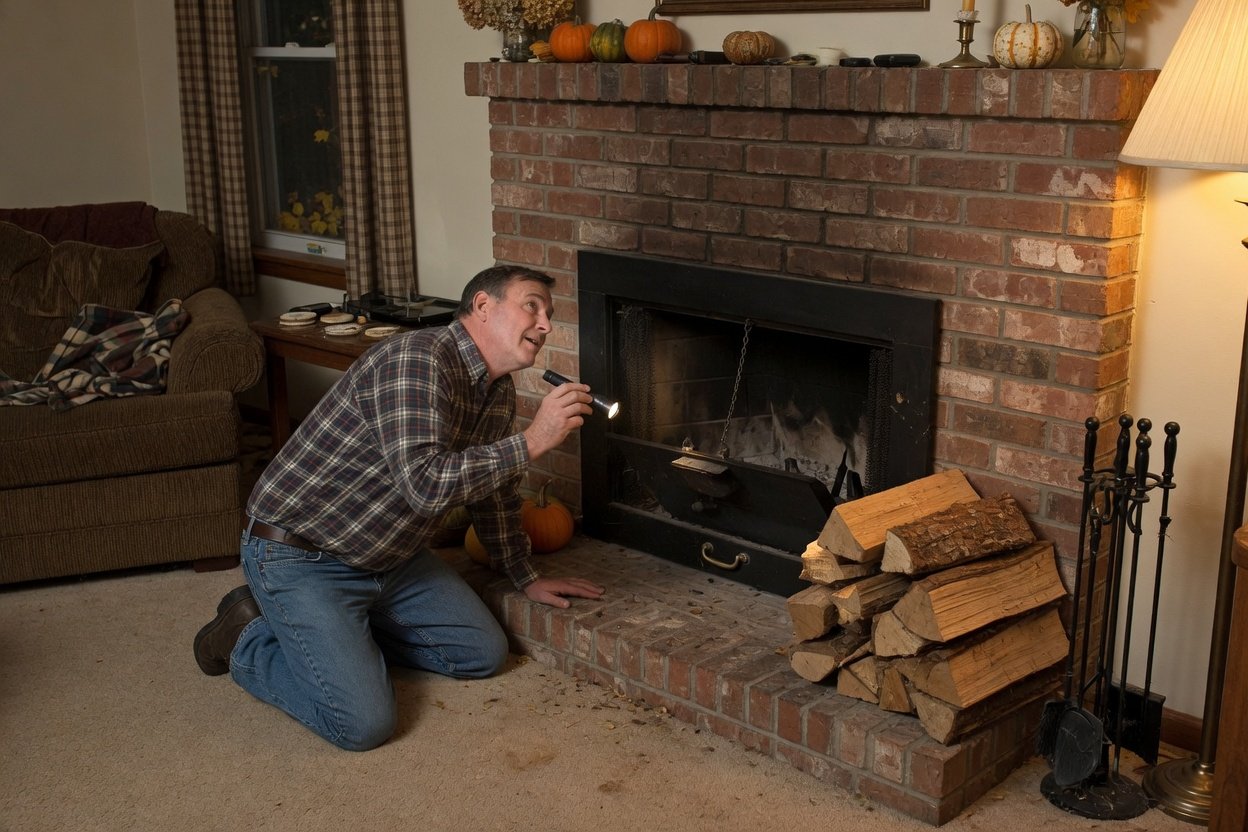
- Open the damper and look up with a flashlight. You should see daylight (on most open chimneys) and no obstructions: nests, leaves, fallen bricks.
- Look for creosote: a black, flaky or tar-like buildup inside the firebox and flue. More than a thin layer needs cleaning. Creosote is what burns in a chimney fire.
- Check the firebox: cracked or missing firebrick and crumbling mortar should be repaired.
- Test the damper: it should open and close fully.
Outside
- Look at the chimney from the ground with binoculars: missing or loose bricks, crumbling mortar, a leaning chimney.
- Chimney cap: should be there and intact. It keeps out animals, rain and debris.
- Flashing where the chimney meets the roof: no gaps or rust.
- White staining (efflorescence) on the bricks means water is getting in.
In the house
- Working smoke and CO alarms. See testing smoke and CO alarms.
- A fire extinguisher nearby.
- A screen or doors in front of the fire.
03Warning signs: stop and call a sweep
- Thick creosote buildup
- Smoke coming into the room instead of up the chimney
- A strong smell of smoke when the fireplace isn't in use
- Cracks in the flue liner or firebox
- Signs of a past chimney fire: puffy, "honeycombed" creosote, warped damper, cracked tiles
04Burn smart
Burn dry, seasoned hardwood. Never burn trash, cardboard, or treated or painted wood. Keep fires a reasonable size, and never leave a fire unattended or close the damper while embers are still hot.
This is one of the items on our fall home inspection checklist.
Source (1)
NFPA: Heating safety.
Related: Attic Pests in Fall: Signs of Squirrels, Raccoons and Bats