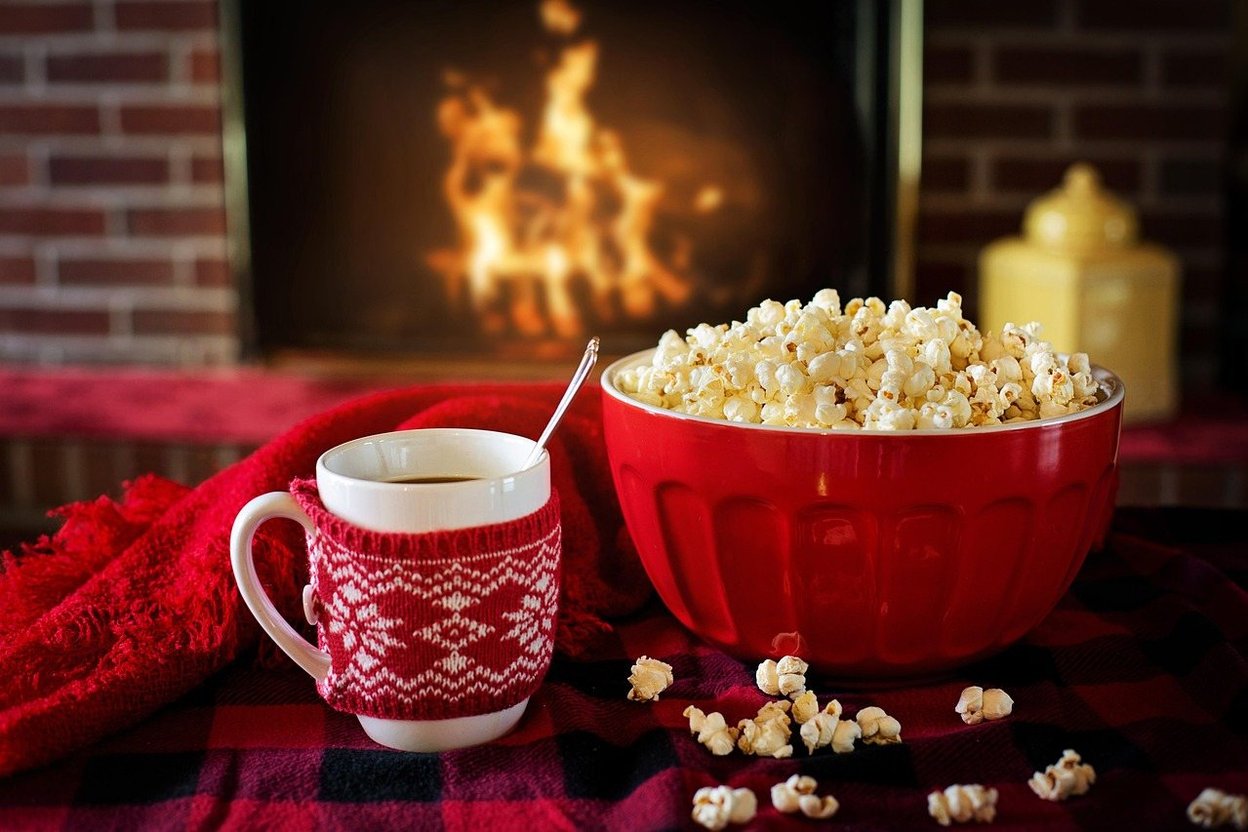
The chairs are borrowed, the guest beds are made, and you plan to have a fire going when people walk in on Thanksgiving afternoon. The day before is when you find out whether that fire is safe. Open the damper fully and shine a light up the flue. Check the firebox and the screen or glass barrier. Clear 3 feet around the hearth, test the smoke and carbon monoxide alarms, and make sure the fire extinguisher is where you can grab it. If any item fails, don't light the fireplace tomorrow. The rest of this article explains how to check each one.
01The day-before pass-or-fail walk
Do the checks in this order, in daylight if you can, with a strong flashlight.
- Damper. Open it all the way. It should move freely and stay open. A damper that is stuck, closed or only partly open can fill the room with smoke, and it is a fire hazard.
- Flue. Look straight up with the light. You need a clear path. On a straight flue you can often see sky at the top. Look for nests, leaves, fallen debris and the creosote described below.
- Firebox. Look for cracked or loose brick or panels, missing mortar, and a warped metal damper or panel.
- Barrier. A screen should cover the whole opening. A gas unit should have its glass front in place and, on newer units, a mesh safety barrier.
- Three-foot zone. Nothing that can burn should be within 3 feet of the opening.
- Alarms. Press the test button on every smoke and carbon monoxide alarm.
- Extinguisher. Check that it is charged and within reach of the room.
From the hearth, a flashlight shows the lower flue, the damper and the firebox. It can't show cracked flue tiles higher up, gaps in the smoke chamber or damage behind the masonry. Only a sweep can judge those parts. Any of these means stop: a damper that won't open, no clear view up the flue, a nest or debris, shiny or chunky creosote, cracked or warped parts, a gas smell, a missing barrier, or a dead alarm. If you find any of them, the fireplace stays cold.
02Why a full house raises the stakes
The U.S. Consumer Product Safety Commission (CPSC) estimates that fireplaces and chimneys were involved in an average of 15,400 fires a year from 2020 to 2022, with about 30 deaths and 90 injuries a year. CPSC lists the causes as cracked, blocked or creosote-coated chimneys and embers that land on things that can burn. It also warns that a fireplace that doesn't vent well can produce carbon monoxide.
Timing matters too. NFPA counts an average of 37,365 home heating-equipment fires a year from 2020 to 2024, and 46 percent of them happened from December through February. Fireplace and chimney fires were only 6 percent of the larger heating fires in that data, but they caused 19 percent of the direct property damage. The U.S. Fire Administration's (USFA) 2017–2019 report, a separate set of data, found that residential heating fires peaked from 5 to 9 p.m. That covers dinner and the evening after it, when the room is full. In 27 percent of the heating fires that spread beyond the appliance, the heat source was too close to something that could burn.
Overnight guests add carbon monoxide to the risk. The gas has no color or smell. Its early symptoms are headache, dizziness, nausea and confusion, which people often mistake for the flu. Someone asleep in a guest room won't notice those symptoms at all.
03Wood fireplaces: what the flue, damper and fuel tell you
Soot or glaze. Creosote is black or brown. It can be crusty and flaky, sticky like tar, or shiny and hard, and every form of it burns. The Chimney Safety Institute of America (CSIA) says a masonry chimney should be swept once sooty buildup reaches 1/8 inch, about the thickness of two stacked coins. If you see any glaze at all, have it swept sooner. A factory-built metal fireplace should be swept as soon as there is any noticeable buildup, because the deposit is acidic and eats into the metal. If you see either one, don't light the fireplace.
Signs of an earlier chimney fire. Many chimney fires burn slowly and nobody notices them until a later inspection. Look for these signs:
- Creosote that looks puffy or honeycombed
- A warped damper
- Cracked flue tiles
- A discolored or bent rain cap
- Chunks of creosote on the roof or the ground
- Cracks in the outside masonry
- Smoke stains at the mortar joints
A damaged factory-built metal chimney can't be put back in use. CSIA says it has to be replaced.
Fuel. CSIA's rule for fireplaces is well-seasoned wood and nothing else. The EPA says wood burns best below 20 percent moisture, which you can check with an inexpensive moisture meter. Season wood for at least six months. Hardwood often needs closer to a year. Store it off the ground with only the top covered. Seasoned wood is darker and lighter, and two pieces knocked together sound hollow.
Don't burn any of these:
- Wrapping paper, cardboard, foam or plastic
- Glossy magazines
- Painted or pressure-treated wood
- Plywood or particleboard
- Driftwood from the ocean
Never use gasoline, kerosene or charcoal lighter fluid, which can explode. Never burn charcoal or coal in a fireplace, because they produce carbon monoxide.
Glass doors. In an open fireplace, closing the glass doors cuts off air and lays down more creosote. A wood stove works the other way: its door stays closed except while you load it. Don't confuse the two.
04Gas fireplaces and gas logs
A sealed gas fireplace, with a fixed glass front, needs this check:
- The glass is intact and latched.
- The pilot stays lit.
- There is no soot on the glass or logs.
- There is no gas smell.
CPSC says the glass can reach 500°F or even 1,000°F and can cause a severe burn in seconds. Since January 1, 2015, new gas fireplaces and vented gas fireplace heaters have come with a protective barrier. Older units need a retrofit barrier from the fireplace's manufacturer. Even with the barrier in place, an adult still has to watch the children.
A vented gas log set sits inside a wood-burning fireplace. It comes with a damper clamp that keeps the damper from closing all the way. Manufacturer instructions say the damper must stay fully open while the logs burn. Check that the clamp is still there. If the clamp is missing or loose, setting it is a job for a qualified technician, not something to fix the night before.
Gas burns cleaner than wood, but CSIA says gas chimneys still need a yearly inspection, because nests and debris can block them. Call a qualified gas-fireplace technician for any of these:
- A gas smell
- A pilot that won't stay lit
- Soot on the logs or glass
- Exhaust coming into the room
If the gas smell is strong, get everyone outside before you make the call.
05The room the guests will stand in
The National Fire Protection Association (NFPA) keeps it simple: anything that can burn stays at least 3 feet from the fireplace. That includes:
- Throw pillows and blankets
- Stacks of coats
- Gift bags and wrapping paper
- The kids' craft table
- Extra folding chairs
CPSC specifically mentions carpets, furniture, papers and the Christmas tree. Leave decorations near the fireplace off until the 3-foot rule is met.
Glass doors and screens can stay dangerously hot for several hours after the fire is out. NFPA says children and pets should stay out of the 3-foot zone during that time. That includes the outside vent of a gas unit.
Put cooled ashes in a metal can with a tight lid. Store it outside, at least 10 feet from the house and any other building.
Alarms. CPSC says to put a smoke alarm on every level and in every bedroom. Put a carbon monoxide alarm on every level and outside every sleeping area. Test them every month. The CDC says to replace carbon monoxide detectors when the manufacturer says to, or every 5 years. If the CO alarm goes off or someone has flu-like symptoms, get everyone into fresh air and get medical care. Call 911 for anyone who is unconscious or can't respond.
Two fireplaces. In a tightly sealed house, a fire in one fireplace can pull smoke down a second, unused flue. CSIA's fix is to let fresh air in, such as by opening a window a crack.
06If the check fails: who to call and what it costs
If anything on the list failed, leave the fireplace unused. Book a CSIA-certified chimney sweep for a wood or masonry fireplace. Book a qualified gas technician for a gas appliance. Cleaning it yourself the night before doesn't replace that visit. A full sweeping covers the flue and the smoke chamber, not just the firebox you can see. CSIA says chemical cleaners don't replace a sweep and an inspection.
CSIA follows NFPA 211, which says chimneys, fireplaces and vents "shall be inspected at least once a year" for soundness, freedom from deposits and correct clearances. Cleaning and repairs follow if they're needed. This applies even to a fireplace that is rarely used. Whether your state has adopted the standard varies.
Here are 2026 price ranges from two cost guides:
- Standard sweep: $129–$381 (Angi, average around $254); $150–$375 (HomeGuide). A sweep visit takes about 45 minutes to an hour.
- Level 1 inspection (the basic visual check): $160–$300 (Angi); $100–$250 (HomeGuide, including basic cleaning).
- Level 2 inspection (camera inspection, used after a chimney fire, a sale or a change of appliance): $260–$460 (Angi); $250–$600 (HomeGuide).
- Gas fireplace maintenance: $80–$130 (Angi).
- Damper repair: $100–$250. Damper replacement: $160–$520 (Angi).
Sweeps get booked up as the weather turns cold, so call this month rather than the week of Thanksgiving.
07Running the fire once people are in the house
- Open the damper fully before you light the match, and put the screen in place.
- Build a small fire. CPSC warns that a large, overloaded fire can overheat the walls or roof structure, especially with a metal factory-built fireplace.
- Use only one manufactured log, and only if the package and your fireplace allow it. Don't add it to a wood fire that's burning. Wait at least two hours after a wood fire. Don't poke it.
- Have one adult keep watch on the children and pets.
- If smoke rolls into the room, stop feeding the fire and put it out. The usual causes are a damper that isn't fully open, a blockage, or the house pulling air down the flue.
- If the chimney roars, pops or rumbles like a freight train, or thick smoke or flames come out of the top, treat it as a chimney fire. Get everyone out and call 911.
- Make sure the fire is completely out before anyone goes to bed or leaves the house. Keep the damper open until the ashes are cold.
Related: Fall Home Inspection Checklist: 20 Things to Check Before the First Freeze
Sources (19)
Photo by JillWellington on Pixabay.