A professional home inspector looks at a house the same way every time: from the outside in, from the top down. You can borrow that habit for a fall walk-around of your own house. An afternoon now can save you a frozen pipe, a wet basement or a roof leak in February.
This isn't a replacement for a licensed inspector or a contractor. It's a list of things a homeowner can safely look at, so you know what needs attention before winter. If anything on the list involves a roof, gas, or electrical panel work you're not comfortable with, call a pro.
01Outside: the roof and gutters
- Look at the roof from the ground. Use binoculars. Look for missing, curled or cracked shingles, and anything lifted around vents, chimneys and skylights.
- Check the flashing. The metal around the chimney and where roofs meet walls should be tight and sealed, not bent or pulled away.
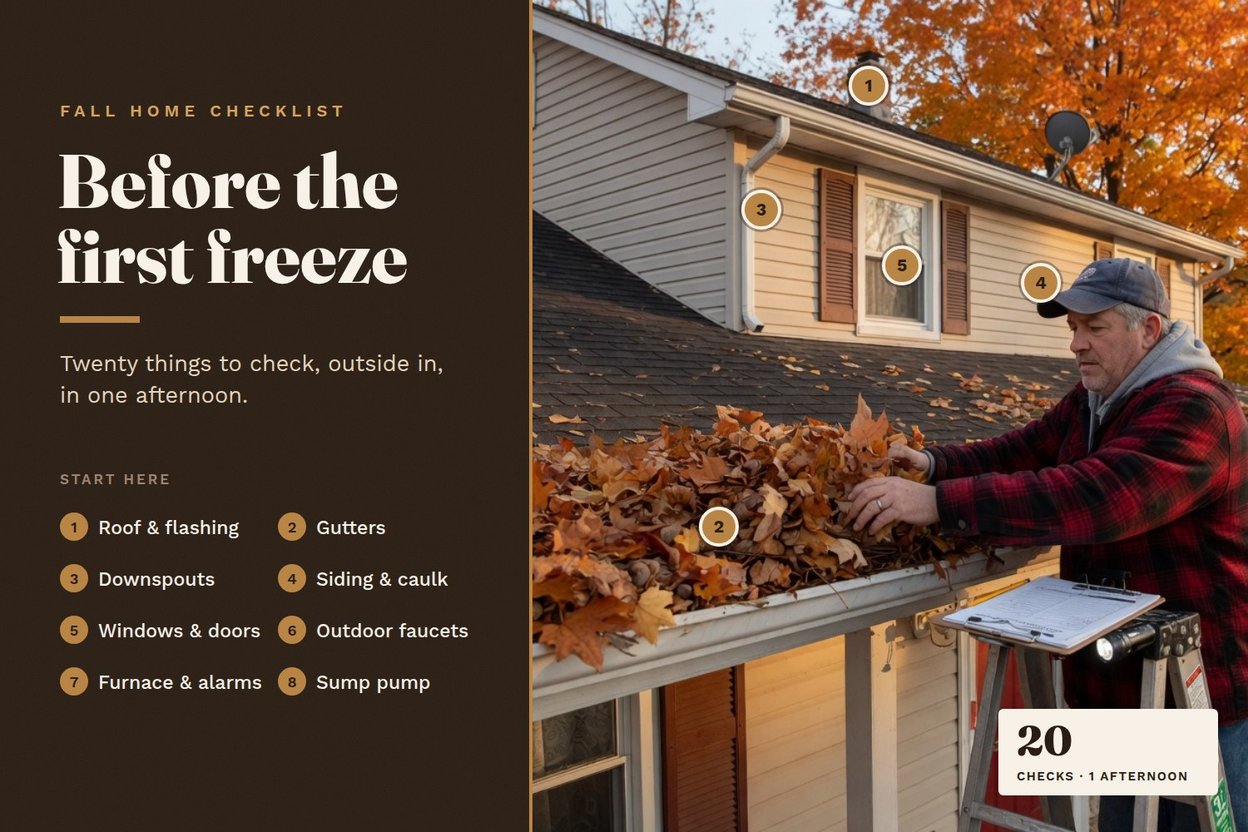
- Clean the gutters after most of the leaves fall. Clogged gutters overflow, and overflow in winter becomes ice. See our guide to gutter overshoot.
- Make sure downspouts carry water away. The water should land at least 4 to 6 feet from the foundation. An extension costs a few dollars.
02Outside: walls, windows and ground
- Walk the siding. Look for cracked, loose or missing pieces, and gaps where pipes and wires go into the house. Mice are looking for a winter home right now.
- Check the caulk around windows and doors. Cracked or missing caulk lets in water and cold air.
- Look at the grading. The ground should slope away from the house. Low spots next to the foundation hold water against the wall.
- Shut off and drain outdoor faucets. Disconnect the hoses. If you have shutoff valves inside, close them and open the outside spigot to drain it.
- Blow out the sprinkler system if you have one, before the first hard freeze.
- Trim branches back from the roof and wires. Ice and snow load turn overhanging branches into broken gutters and damaged shingles. Leave anything near power lines to the utility or a licensed tree service.
03Inside: heat and air
- Test the furnace before you need it. Turn the heat on now, while it's still mild, so you find a problem before the first cold snap and the service rush.
- Replace the furnace filter. A clogged filter makes the system work harder and can shorten its life.
- Schedule a professional furnace tune-up if it hasn't had one in a year, especially for gas or oil systems.
- Check the chimney before the first fire. Look for nests and debris, and have a wood-burning fireplace swept and inspected if it's been a year or more.
04Inside: safety
- Test every smoke alarm and carbon monoxide alarm. Replace batteries, and check the date on the back. Smoke alarms are generally replaced every 10 years. Make sure you have a CO alarm on every level with sleeping areas.
- Check the dryer vent. Pull lint out of the duct and make sure the outside flap opens and closes. Lint buildup is a fire risk.
05Inside: water and plumbing
- Look under sinks and around the water heater for leaks. Small drips become big problems in winter.
- Find your main water shutoff. Make sure everyone in the house knows where it is and that it turns. If a pipe bursts, that valve is the most important thing in the house.
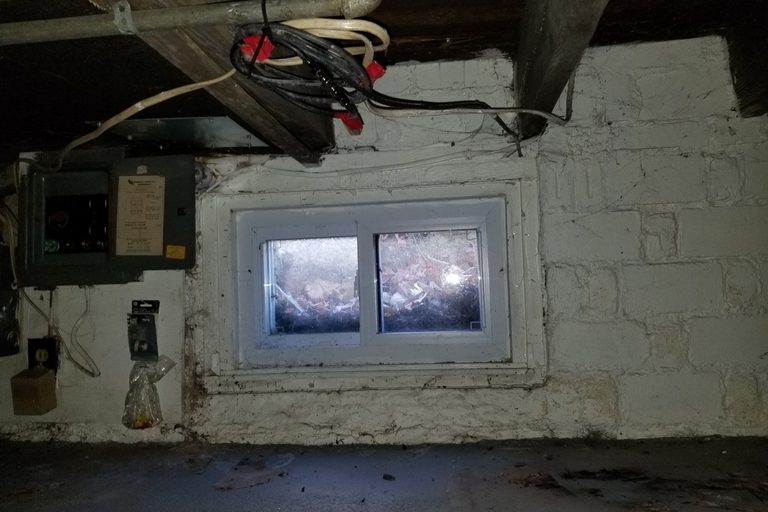
- Insulate pipes in cold spots. Crawl spaces, exterior walls and unheated garages are where pipes freeze. Foam pipe sleeves are cheap.
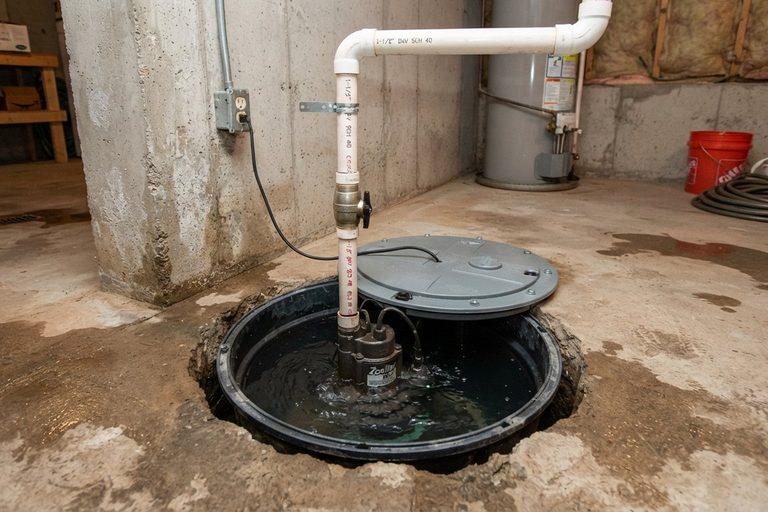
- Test the sump pump. Pour a bucket of water into the pit and make sure it kicks on and pumps out. If your area loses power in storms, think about a battery backup.
06Write it down
Make a quick list of what you found: fix now, fix before spring, and call a pro. Take photos. It's a good habit, and if you sell the house someday, you'll have a record of how you kept it up. For a deeper walk-through of the whole house, see our DIY home inspection guide.