Safety
Water Heater Temperature: Why 120°F Is the Right Setting, and How to Check Yours
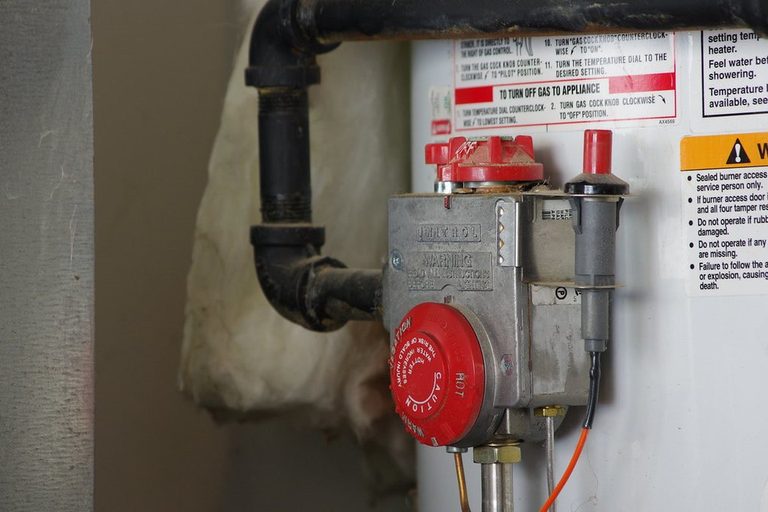
Why 120°F is the recommended water heater setting for safety and energy, and how to measure your tap temperature in about five minutes.

A 10-minute check for Halloween and holiday lights: safety labels, outdoor-rated cords, GFCI outlets, overloaded circuits and the warning signs of a cord about to fail.
Before any lights go up, spend 10 minutes on this. Pull every string and cord out of the bin. Find the safety-lab label and check the cords are rated for outdoor use. Throw out anything with cracked insulation or broken plugs. Count how many strings will share one outlet, and push the test button on the outdoor GFCI. That covers most of what starts holiday fires and sends people to the ER.
It's worth the time. The U.S. Consumer Product Safety Commission (CPSC) counts about 14,900 emergency room visits from holiday decorating in a single season. That works out to roughly 160 a day. The CPSC has also long estimated that extension cords start about 3,300 home fires a year.
Do it now, while the Halloween lights and inflatables are going up. Use the same check again before Thanksgiving, when the Christmas bins come down from the attic.
Every light string should have a tag near the plug from a nationally recognized testing lab. The two marks you'll see most are UL and ETL.
No label, or a tag you can't read? That string stays inside or goes in the trash. Bargain strings with no listing mark are the ones nobody tested for fire or shock risk.
A green-label string on the porch railing is a common mistake. Indoor strings aren't built to stand up to rain, snow and UV. Swap it for a red-label string.
Plug each string in on a table or the garage floor, not up on the gutter. Then unplug it and slide the whole length through your hand. You're feeling and looking for:
Any one of those and the string or cord is done. Electrical tape is not a repair for a holiday cord that's going to sit out in the weather for six weeks.
The letters printed on an extension cord's jacket tell you where it can go. The one you need for outdoor use is W. You'll see it as SJTW, SJOW or SOOW. The W means the jacket is rated for weather and wet locations.
The thin brown or white cords from the junk drawer don't have a W. They belong behind the couch, not across the lawn to the inflatable.
Also check the gauge (AWG), printed on the jacket too. The smaller the number, the thicker the wire. A 12-gauge cord handles a 15-amp load. Thinner 16-gauge cords are fine for a few LED strings but lose capacity over long runs. If you're running 100 feet out to the yard, go thicker.
The cord's tag also lists its amp or watt rating. Your total load on that cord has to stay under that number.
The CPSC rule of thumb is simple: never string together more than three sets of incandescent lights. LED strings can usually be linked in longer runs. The maximum is printed on the tag or box, so go by that number.
Then look at the outlet. A standard 15-amp, 120-volt household circuit carries 1,800 watts total. For something left on for hours, electricians plan on about 80% of that, roughly 1,440 watts. Each light string's tag lists its wattage. Add them up.
Two things people miss:
Don't plug a power strip into another power strip, and don't plug extension cords into each other in a long chain. Use one cord of the right length and gauge.
Outdoor outlets should be GFCI-protected. A GFCI cuts the power in a fraction of a second when current leaks to ground, like through a wet plug or a person. Push TEST and the outlet should go dead (check with a nightlight or a light string). Push RESET to bring it back.
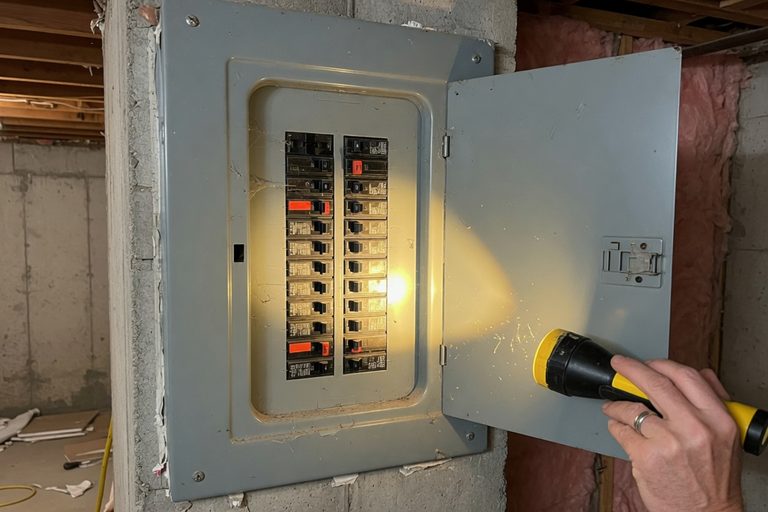
If TEST does nothing, or the outlet stays live, don't use it for outdoor decorations until it's replaced. Our GFCI and AFCI testing guide walks through it, including how to find the hidden GFCI in the garage or basement that protects your outdoor outlets.
A GFCI that trips every time it rains is doing its job. It's telling you a connection is getting wet. Lift plug connections off the ground and keep them out of puddles and gutters. Make sure the outlet has a cover that closes with the plug still in (often called an in-use or bubble cover).
Walk the path each cord will take before you run it.
Put displays on a timer. Outdoor-rated plug-in timers are cheap and save you forgetting to unplug at 2 a.m. Turn indoor lights off when you leave the house and when you go to bed.
Then, a day or two after everything is lit, put your hand on each cord and plug. Warm is a warning, hot is an emergency. A cord or plug that's warm to the touch is overloaded or failing. Unplug it and spread the load across another circuit, or use fewer strings.
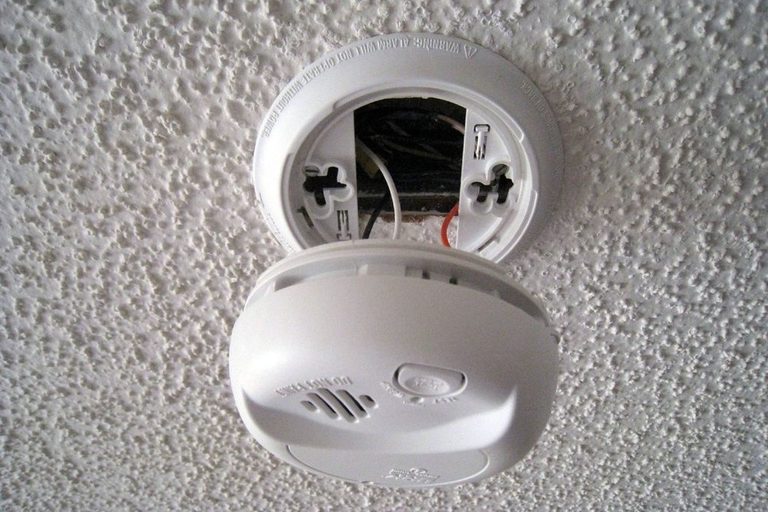
While you're at it, push the test button on your smoke alarms. Holiday lights, candles and a dry tree all show up in the same few weeks. Our smoke and CO alarm guide has the replacement dates.
If you're doing a full fall walk-around anyway, add this list to our fall home inspection checklist.
Photo by ShenXin on Pixabay.
Why 120°F is the recommended water heater setting for safety and energy, and how to measure your tap temperature in about five minutes.
Test your CO alarms and learn what each beep means. This guide covers testing procedures, sound patterns, when to replace units, and safety steps.
What to look for on your electrical panel without taking the cover off: the brands electricians worry about, scorch marks, rust, double taps, and when to call an electrician.