Inspection FAQ
Credit or repairs. What buyers are asking for after the report
Compare a repair credit, completed repairs, and a price cut after a home inspection, with loan limits and how to get terms in writing.

Home inspections can help buyers make an informed decision. Learn what to do during the inspection and when to back out if needed.
A home inspection tells you what is wrong with a house while you can still do something about it. Inside your inspection contingency window, the report gives you three options: ask the seller to fix things, ask for a credit or lower price, or cancel and usually get your earnest money back. As of October 2026, a standard inspection costs about $300 to $425 for most single-family homes. That is small money next to a roof replacement or a sewer line you didn’t know was cracked.
The sections below answer the questions buyers ask most: whether you can inspect the house yourself, whether you should be there, how long you have to back out, how often deals fall apart, and how many inspections you can order.
Yes. Nothing stops you from walking the house with a flashlight and a notepad, and on this site we think you should. A careful look before you make an offer can rule out a bad house before you spend a dime: water stains on ceilings, a musty basement, doors that won’t latch, a panel full of double-tapped breakers.
Your own walk-through is a first screen, though, and a paid inspector still needs to follow it. A trained inspector spends a few hours on things most buyers skip: the attic, the crawl space, the inside of the electrical panel, the age and venting of the furnace and water heater, the roof surface, and how the yard drains. They also write it up in a report you can hand to the seller and your agent. Sellers and listing agents take a written report from a third party far more seriously than a buyer’s list of worries.

Don’t count on the lender to catch problems for you. Lenders require an appraisal, and an appraisal is not an inspection. HUD says so plainly on the form it gives every FHA borrower, “For Your Protection: Get a Home Inspection”. An appraisal estimates value to protect the lender. It does not evaluate condition to protect you, FHA does not do home inspections, and an inspection only happens if you arrange one.
Yes. If you can only make part of it, come for the last hour, when most inspectors walk you through what they found.
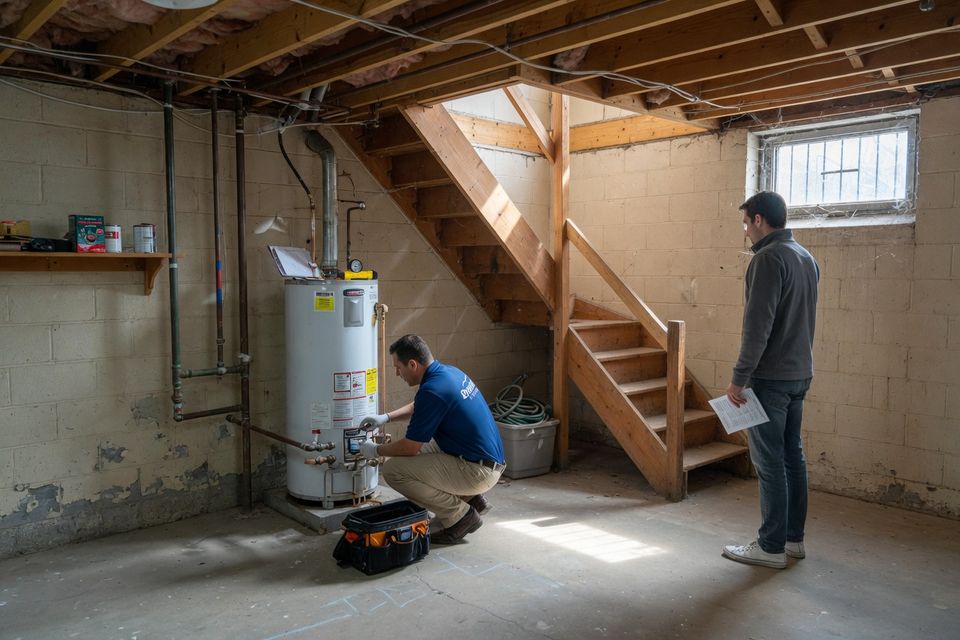
A report line like “evidence of moisture at the northeast basement corner” can mean a damp spot the size of your hand or a wall that has been wicking water for years. Standing there, you can see which one it is. You can also ask the question the report often won’t answer directly: is this a fix-it-now problem, or something to budget for in five years?
Being there also teaches you the house. Have the inspector show you the main water shutoff, the gas shutoff, the electrical panel, the furnace filter slot, and the sump pump if there is one. Find the data plates on the furnace, AC condenser, and water heater and photograph them. The manufacture date is usually printed there or coded into the serial number, and it tells you how close each one is to replacement.
Whatever your contract says. There is no single national deadline. Most purchase agreements include an inspection contingency, and the clock usually starts when the contract is signed by both sides, not when the inspection happens. Seven to ten days is a common window, so in practice you have to book the inspector, get the report, and respond to the seller inside that time.
Some states use standard forms with their own defaults, so check your state and read your own contract:
The rule that matters most: if the deadline passes and you haven’t sent written notice, you have usually accepted the house as it is. Put the date in your phone the day you sign. Ask your agent whether the contract counts calendar days or business days.
More often than you might think, and inspection problems are the most common reason.
The two numbers differ because they measure different things, but the pattern is the same: inspections are where deals break.
That isn’t a bad thing for you. If the report turns up a failing roof, active foundation movement, or a 40-year-old electrical panel the seller won’t address, walking away during the contingency costs you the inspection fee. Finding it after closing costs you the repair. Most of the time, though, the report leads to a negotiation instead of a cancellation: a repair list, a closing-cost credit, or a lower price.
Skipping the inspection contingency to win a bidding war gives up that protection. NAR’s 2025 surveys found roughly 1 in 5 buyers waived it. If you’re tempted, some buyers keep an “informational only” inspection in the contract. They can’t negotiate repairs with it, but they can still walk away if the house has a deal-breaker.
There is no legal limit. The practical limits are your contingency deadline, your budget, and the seller’s patience about letting people into the house. Every inspection has to be scheduled, done, and reported back before your window closes, so book the add-ons in the same week as the general inspection.
The general inspection is visual. It doesn’t include lab tests or opening walls. Follow-up specialists are worth calling when the general report or the house itself points to something. Typical costs as of October 2026, per HomeAdvisor’s national data:
Other add-ons depend on the house. A sewer scope makes sense for older homes with big trees near the line. Order a septic inspection if the house isn’t on city sewer. Bring in a structural engineer when the general inspector notes cracks or sloping floors that are beyond what they can judge. Termite inspections are standard in many areas, and some loans require them.
A seller can push back on a third or fourth visit, especially if nothing in the first report justified it. Have the general inspector put the recommendation in writing (“recommend evaluation by a licensed structural engineer”). Then your request for another visit has a reason behind it.
Treat it like a working appointment, not a tour. For more on what a full home inspection covers, see our walkthrough guide. On the day:
Don’t expect the inspector to tell you whether to buy. Their job is to report condition. Deciding what that’s worth in price or credits is up to you and your agent.
Compare a repair credit, completed repairs, and a price cut after a home inspection, with loan limits and how to get terms in writing.
Learn why an inspection report is not a repair list, how to sort findings into repair, monitor, and evaluate, and make a focused request.
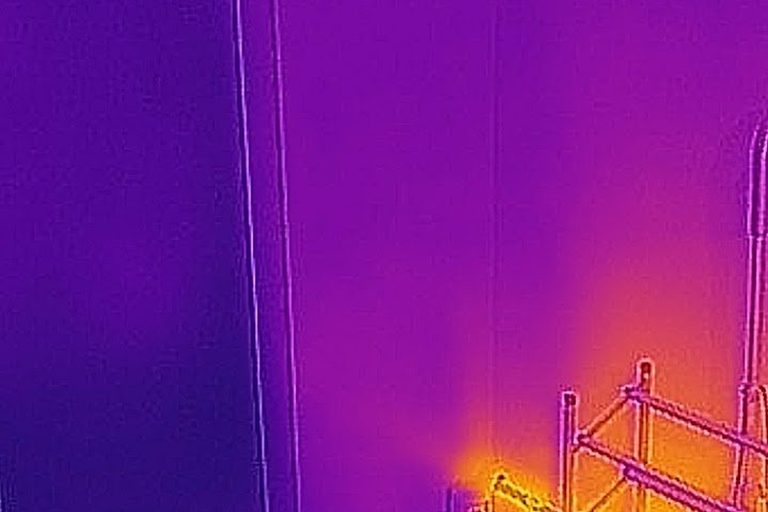
A thermal camera flags possible moisture, missing insulation, air leaks and hot wiring. Learn what a scan can and can't confirm, and what it costs.