Inspection FAQ
Credit or repairs. What buyers are asking for after the report
Compare a repair credit, completed repairs, and a price cut after a home inspection, with loan limits and how to get terms in writing.

Learn the importance of inspection contingency in real estate transactions. Discover how they protect buyers and identify potential issues.
An inspection contingency is a clause in your purchase contract that gives you a set number of days to have the house inspected and then, based on what turns up, ask the seller for repairs or a credit, or walk away and get your earnest money back. Miss the deadline and that protection usually ends. That’s the whole idea: a short window where you can still say no without losing money.
Here’s how the clause works in practice, what to inspect inside that window, and where buyers lose their leverage.

Most inspection contingencies have four parts. Read your contract for each one before you sign:
Check whether your contract counts calendar days or business days. A ten-day calendar window that starts on a Thursday includes two weekends’ worth of inspector availability problems.
Most states use a contract form written by the state Realtor association or the local board, so the mechanics vary. Three examples show how much:
The point: don’t assume your contract works like a friend’s in another state. Ask your agent, or a real estate attorney in states where attorneys handle closings, exactly when your window closes and what you have to send to keep it open. Check your state’s standard form.
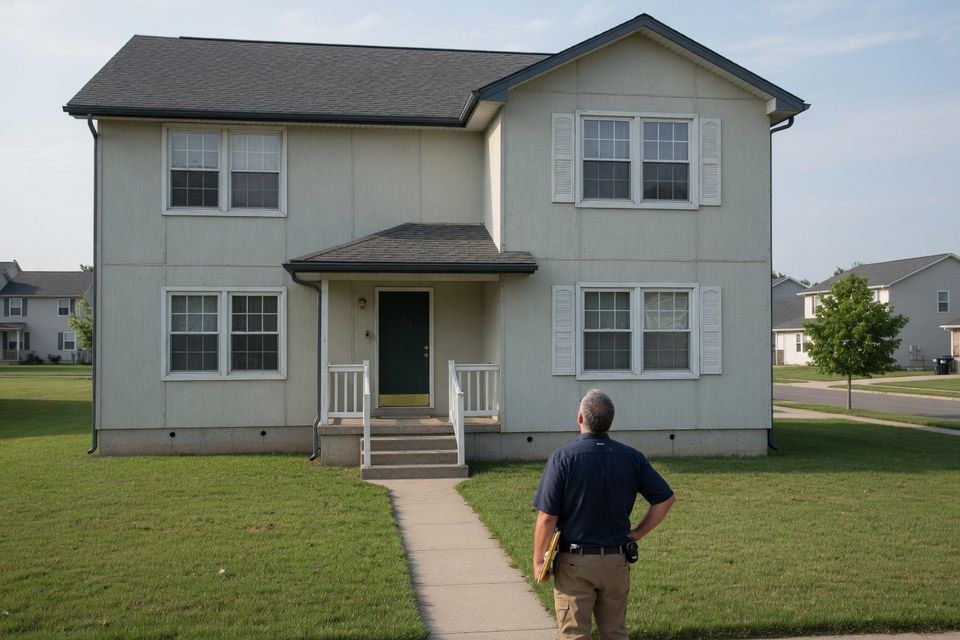
The contingency covers whatever inspections you order before the deadline. Book them the day your offer is accepted, because inspectors in busy markets can be booked out several days.
A general home inspection covers the roof, structure, electrical, plumbing, heating and cooling, and the visible parts of the attic, crawl space and basement. Expect two to four hours on site for an average house and a written report within a day or two. Most buyers pay roughly $300 to $425, with a national average around $344 (HomeAdvisor cost data, as of June 2026). Big or old houses cost more.
Go to the inspection. You’ll learn more in the last half hour, walking through findings with the inspector, than from reading the report alone.
Mold testing is a judgment call. If there’s visible growth or a musty smell, the moisture source matters more than a lab result naming the species. Fixing the leak is the actual repair.
On a 10-day contingency, a workable schedule looks like this:
If a specialist can’t get out in time, ask the seller in writing for an extension before the deadline passes. Sellers often agree, but a verbal “sure, take a few more days” won’t protect you.
An inspection report on a perfectly good house can run 40 or 50 pages of items. Don’t send the seller the whole list. Sort it into three piles:
For each item you do ask about, cite the page in the report, attach a photo, and if you can, attach a contractor’s bid. “Replace water heater, $1,850 per attached quote” gets a faster yes than “water heater is old.”
Many buyers prefer a credit (or a price reduction) over seller repairs. A seller who’s moving out has every reason to hire the cheapest contractor. If you do accept repairs, require receipts from licensed contractors and permits where your town requires them, and check the work at your final walk-through.
Credits have a catch: lenders cap how much the seller can contribute toward your closing costs, and the cap depends on the loan type and your down payment. Ask your lender before you agree to a number.
The seller doesn’t have to fix anything. They can agree, offer part of what you asked for, offer a credit instead, or say no. If you can’t reach a deal before your deadline, you can still cancel under the contingency, as long as you do it in writing and on time.
The seller is also weighing what happens if you walk. In many states, once a seller knows about a material defect, they have to disclose it to the next buyer, so the next offer may run into the same issue.
Earnest money is usually 1% to 3% of the price: $3,000 to $9,000 on a $300,000 house. It sits in escrow and goes toward your closing costs if the deal closes.
If you cancel within the contingency period, following the contract’s notice rules, the deposit normally comes back to you. Send the termination on the form your contract names, keep proof of when it was delivered, and don’t let a deadline slide because a conversation is “going well.”
What you won’t get back: the money you spent on inspections, and in Texas, the option fee. Escrow releases can also take time, because many contracts require both parties to sign a release before the escrow holder pays out. If a seller refuses to sign, that’s a question for a real estate attorney.
Some buyers drop the contingency to make an offer stand out. NAR’s monthly Realtors Confidence Index found 18% of buyers waived the inspection contingency in March 2026, down from 22% a year earlier.
If you’re tempted, there are middle options:
Waiving outright makes sense mainly when you can afford a surprise $15,000 repair (a roof, a sewer line) without it wrecking your finances.
The one thing to remember: the contingency only protects you if you act in writing before the deadline.
Compare a repair credit, completed repairs, and a price cut after a home inspection, with loan limits and how to get terms in writing.
Learn why an inspection report is not a repair list, how to sort findings into repair, monitor, and evaluate, and make a focused request.
A thermal camera flags possible moisture, missing insulation, air leaks and hot wiring. Learn what a scan can and can't confirm, and what it costs.