Inspection FAQ
Credit or repairs. What buyers are asking for after the report
Compare a repair credit, completed repairs, and a price cut after a home inspection, with loan limits and how to get terms in writing.
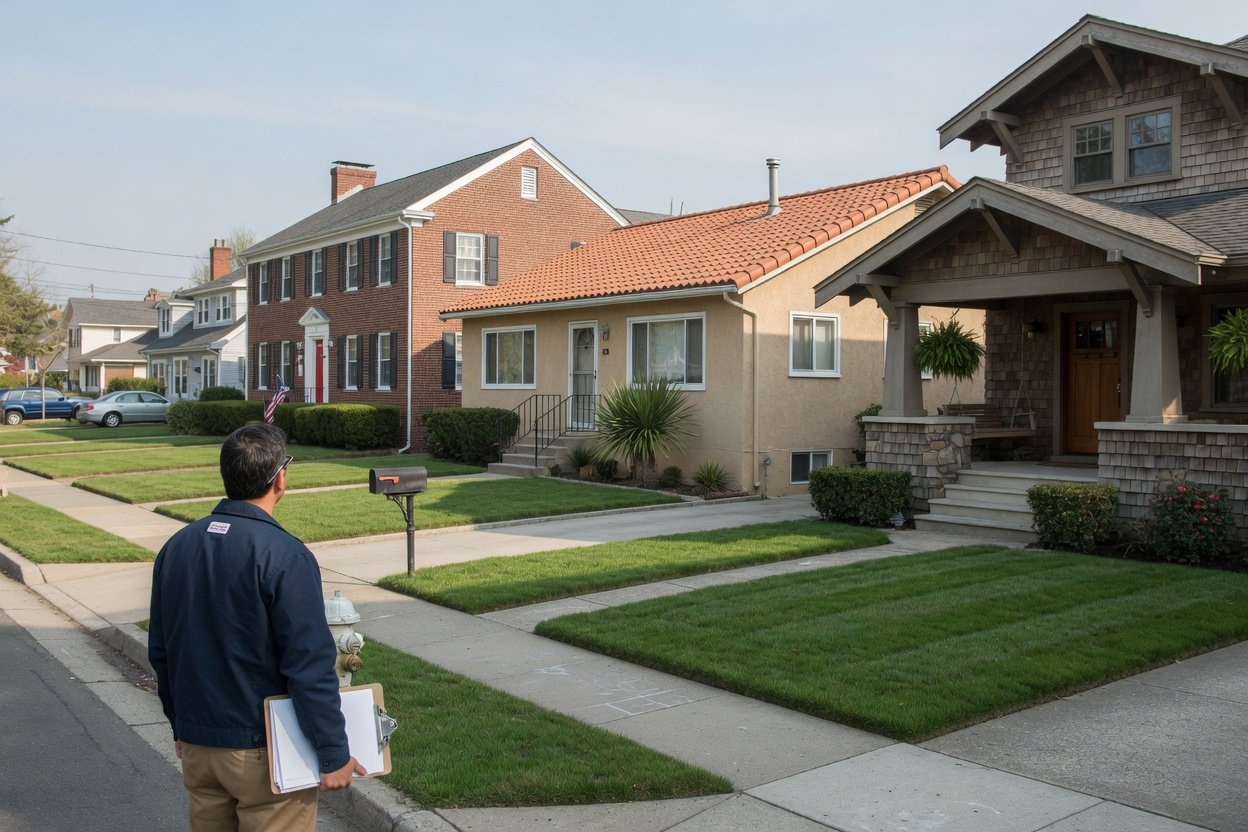
Discover the differences in home inspections between the southern and northern states, from climate to construction and materials used.
Yes, but not in the way most people expect. Every inspector in the country walks the same basic route: roof, structure, foundation, electrical, plumbing, heating and cooling, and the inside of the house. What changes from south to north is what they spend the most time hunting for, and what changes from state to state is who is allowed to call themselves an inspector and what the report has to look like.
If you’re buying in a part of the country you didn’t grow up in, those two differences are worth knowing before you hire anyone.
A home inspection is a visual look at the parts of the house the inspector can reach without tearing anything open. They don’t pull drywall, dig up the yard, or take the furnace apart. You get a written report afterward listing what they saw, what’s worn out, and what’s unsafe.
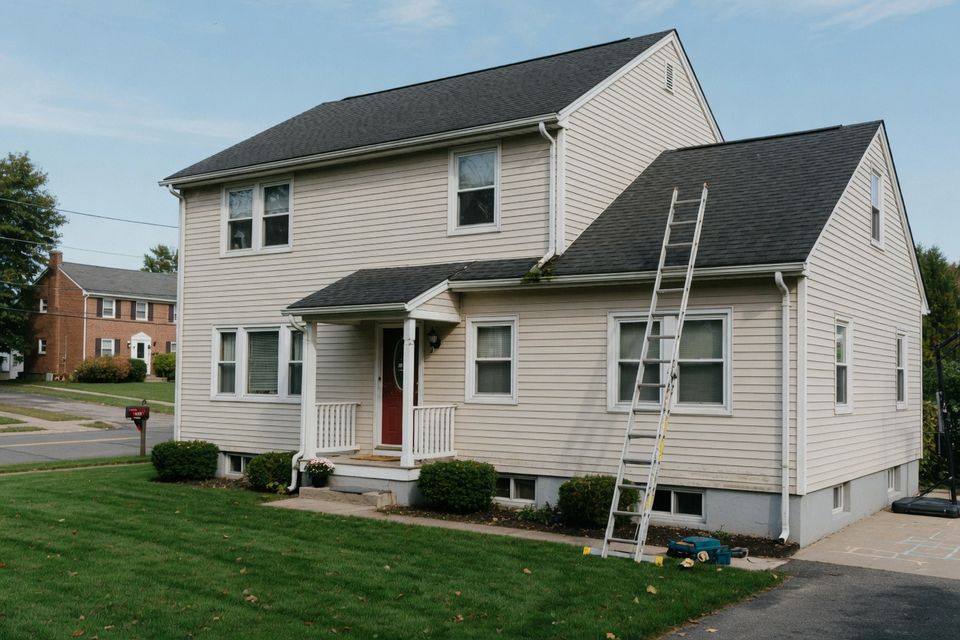
Plan on two to four hours on site for an average house, longer for a big or older one. Be there for the last hour so the inspector can walk you through what they found while you’re standing in front of it.
Heat and humidity drive most of the problems in the South. Water gets into a house from storms, then has a hard time drying out because the air outside is already wet.
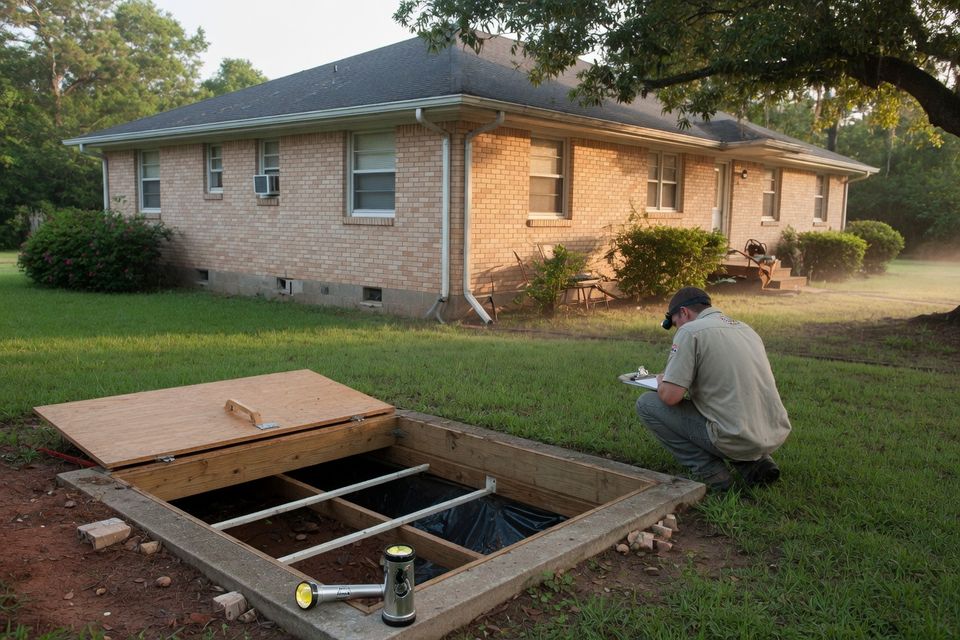
Expect the inspector to spend real time in the crawl space, the attic, and around every window and roof penetration. They’re looking for dark staining on the underside of the roof deck, sweating ductwork, standing water under the house, and soft wood around window sills. A musty smell when you open the crawl space hatch tells you most of the story before anyone crawls in.
Subterranean termites live in every state except Alaska, but they’re most active in warm climates, where structural infestations are common. In the South a separate wood-destroying insect (WDI) inspection is often part of the deal. VA loans, for one, require a termite report wherever the risk is rated moderate-to-heavy or very heavy.
Know who is allowed to do it. In Texas, for example, the wood-destroying insect report for a real estate sale has to be written on the state’s official form by someone licensed in the termite category by the Texas Department of Agriculture’s Structural Pest Control Service. A general home inspector without that license can’t sign it. Other states split the work differently, so ask before you book.
Basements are rare in much of the South. You’ll see slabs poured on grade and, in older houses, pier-and-beam foundations with a short crawl space. On pier-and-beam, the inspector checks the piers for settling, the beams for rot and termite damage, and the floors above for slopes and bounce.
Along the hurricane coast, roof-to-wall connections, roof covering, and window and door protection matter as much as the roof’s age. In Florida this has its own paperwork: a wind mitigation inspection recorded on the state’s Uniform Mitigation Verification Inspection Form (OIR-B1-1802). Insurers use it to give premium credits for wind-resistant features, and the form stays valid for up to five years if nothing structural changes. A Florida-licensed home inspector can sign it after completing the required hurricane mitigation training, and so can licensed contractors, engineers, architects, and certified building code inspectors.
Up north the enemy is cold, and the damage it causes shows up as water once things thaw.
Building codes require footings to be protected from frost, usually by setting them below the local frost line. In cold places that line is deep, which is a big reason basements are common up north: you’re already digging that far. A basement gives the inspector more to look at. Expect them to check the walls for cracks, bowing, white mineral crust (efflorescence), water lines, and rust at the bottom of the water heater and furnace.
When heat leaks out of the living space into the attic, it melts snow on the roof. The water runs down to the cold eave, freezes, and builds a ridge of ice that backs meltwater under the shingles. Inspectors look for stained ceilings along exterior walls, water marks on the attic side of the roof deck near the eaves, and thin or patchy attic insulation. In winter, big icicles along the gutters are the giveaway.
Pipes in exterior walls, crawl spaces, and unheated garages are the ones that freeze. An inspector will look for old repair couplings and water stains that hint a pipe has burst before. They’ll also look hard at the furnace or boiler and its venting, and at chimneys for cracked crowns, loose bricks, and missing caps. Any fuel-burning appliance that vents badly is a carbon monoxide risk, so make sure the house has working CO alarms.
Radon gets more attention in basement-heavy regions, but the EPA says to test no matter where you live, and to fix the house at 4 pCi/L or higher. A radon test is usually an add-on to the standard inspection, so ask for it when you book.
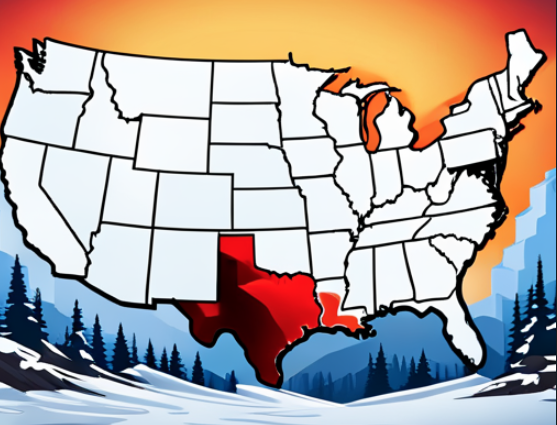
Builders build for the weather they get. In hurricane country you’ll see more concrete block walls, hip roofs, and impact windows or shutters. In snow country you’ll see steeper roofs, heavier insulation, and deep foundations.
That matters for you because an inspector who works one climate may not know the other’s weak spots. Someone who has spent twenty years in Minnesota basements may not know what a failing roof-to-wall strap looks like, and a Gulf Coast inspector may never have traced an ice dam. When you call around, ask how long they’ve worked in that area and what they find most often there. A good local inspector answers that in one breath.
The licensing gap between states is wider than the climate gap. Some states license inspectors in tiers with exams and required report forms. Others don’t license them at all. A few examples, straight from the state agencies:
Rules change, so don’t trust a list, including this one. Search “[your state] home inspector license” and go to the state agency’s own site, not an inspector’s sales page. If your state licenses inspectors, look up the inspector’s license number before you book. If it doesn’t, ask what training they’ve had, how many inspections they’ve done, and whether they carry errors-and-omissions insurance.
Compare a repair credit, completed repairs, and a price cut after a home inspection, with loan limits and how to get terms in writing.
Learn why an inspection report is not a repair list, how to sort findings into repair, monitor, and evaluate, and make a focused request.
A thermal camera flags possible moisture, missing insulation, air leaks and hot wiring. Learn what a scan can and can't confirm, and what it costs.